
Dayton Garage Door Guide
Why a Door Goes Off Track in Dayton
Dayton's 1960s-70s housing stock and cold-severe winters push garage door tracks out of alignment. Here's what causes it and what to check before you call.
- Licensed & Insured
- Same-Area Service Calls
- Upfront Pricing

Leaving It Alone
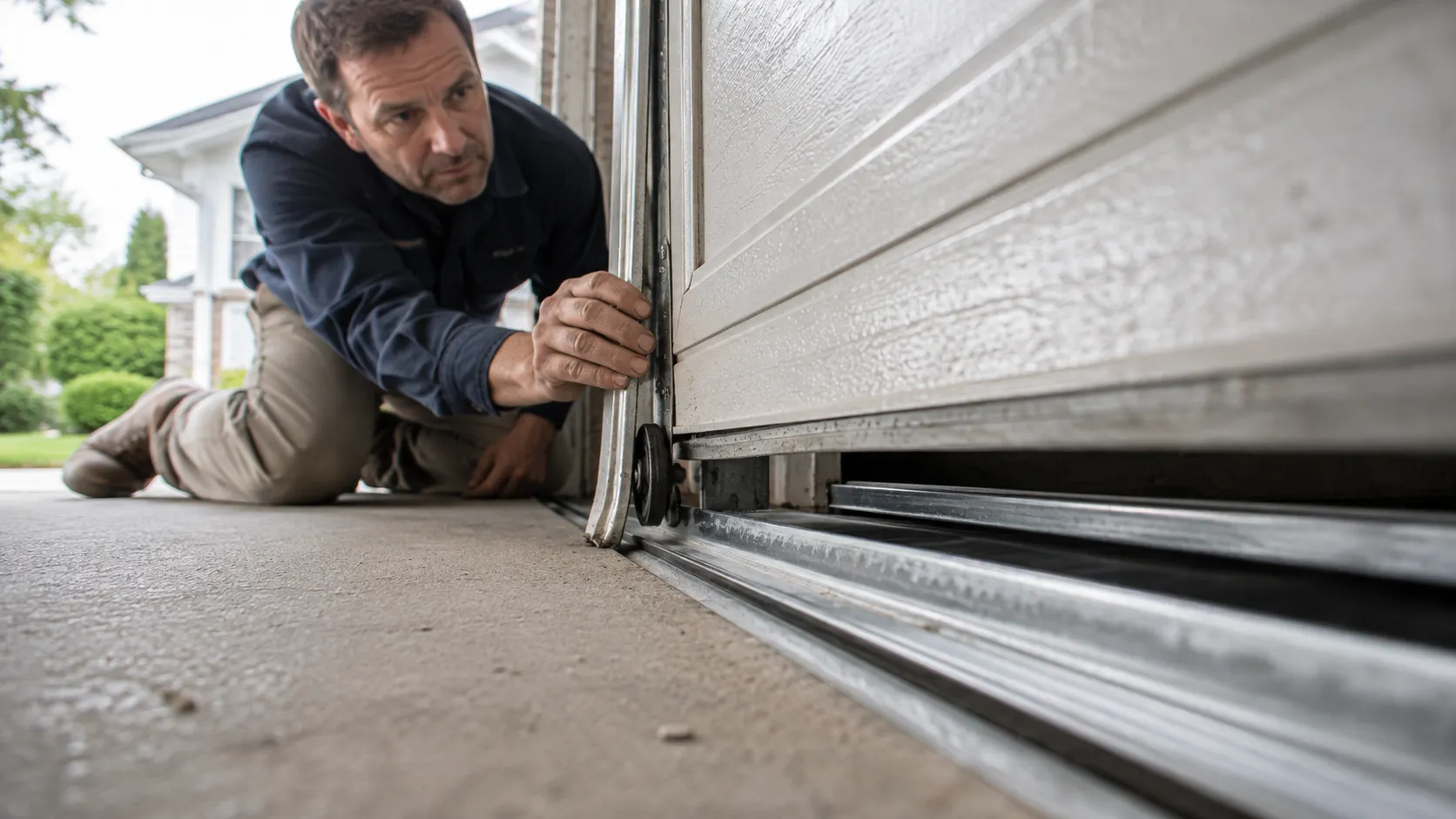
A door that's rattled loose from its track doesn't fix itself, and running the opener anyway is how a bent track turns into a bent track plus a cracked panel plus a ruined roller. We get the instinct - you're already late, the door mostly closes, you'll deal with it later. But once a roller has jumped the track, every cycle grinds the hardware a little further out of true.
On the houses we see most, built between 1938 and 1998 with the bulk of that stock dating to the 1960s and 70s, the track brackets are often the original ones, fastened to jamb wood that's had sixty years to shrink and shift. That combination doesn't forgive being ignored. If your door is visibly cocked to one side or you hear a scrape instead of a roll, that's the moment to stop using it, not the moment to keep pushing the button and hope.
We won't tell you every off-track door is an emergency - plenty aren't - but we will tell you that waiting rarely makes the fix cheaper.
What Local Conditions Do
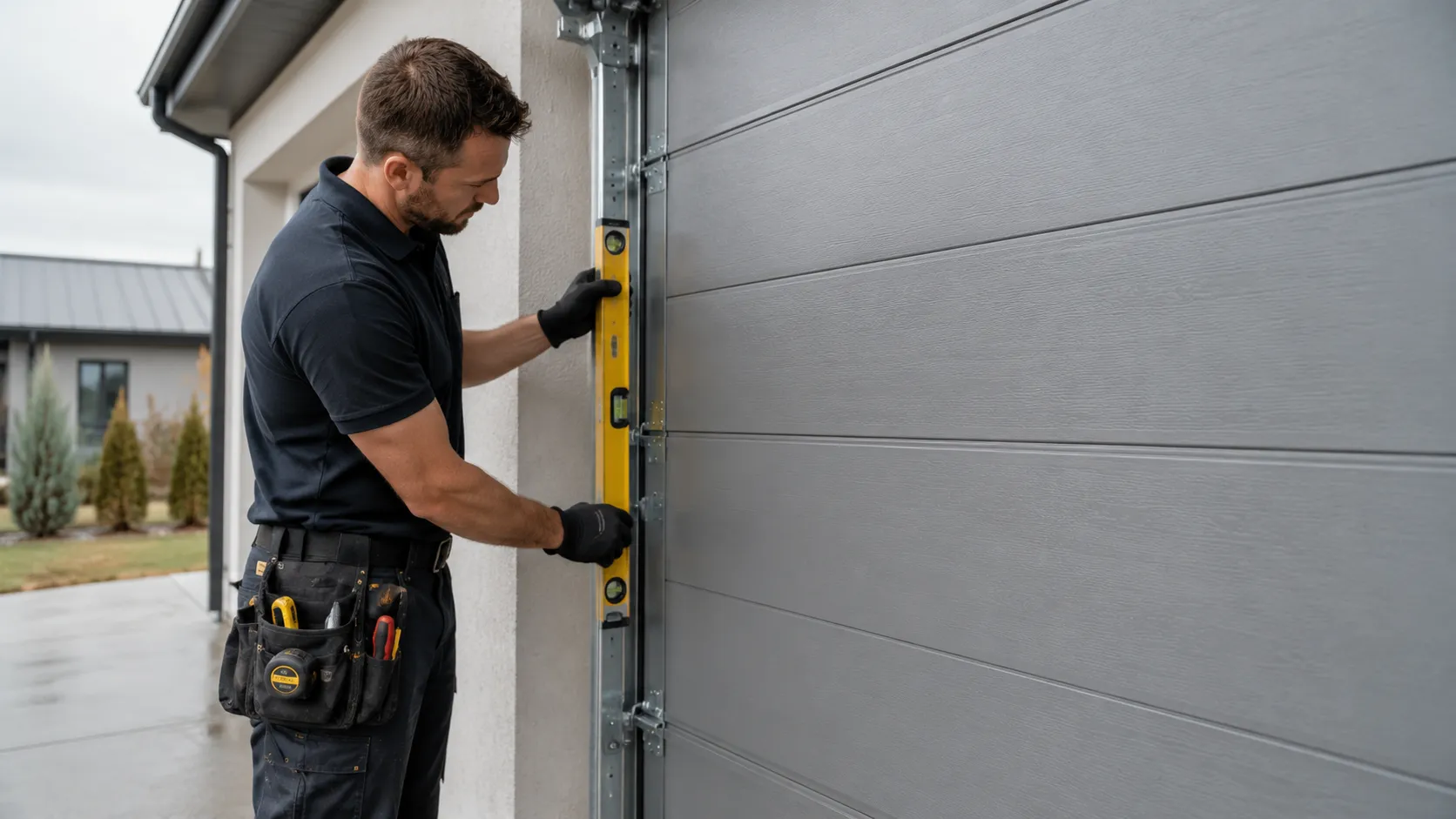
Dayton sits in a cold-severe climate band, and that matters more for a garage door than most people expect. Freeze-thaw cycling through the winter works on the concrete slab under the track, and on houses from the 1960s and 70s era that make up most of the surrounding neighborhoods, that slab has had decades to heave and settle unevenly. When one side of the slab drops even a fraction of an inch relative to the other, the vertical tracks - bolted plumb when the house was new in maybe 1965 or 1971 - stop being plumb.
The door doesn't know that. It keeps trying to travel a straight path through tracks that are no longer straight relative to each other, and that's a slow, mechanical fight the rollers eventually lose. Homes built earlier in that 1938-1998 range often show it worse, since older track hardware wasn't designed with the shim adjustment newer installs use to compensate for slab movement.
This isn't a defect in your door. It's what sixty winters of freeze and thaw do to a fixed steel rail bolted to moving concrete.
What to Look At First
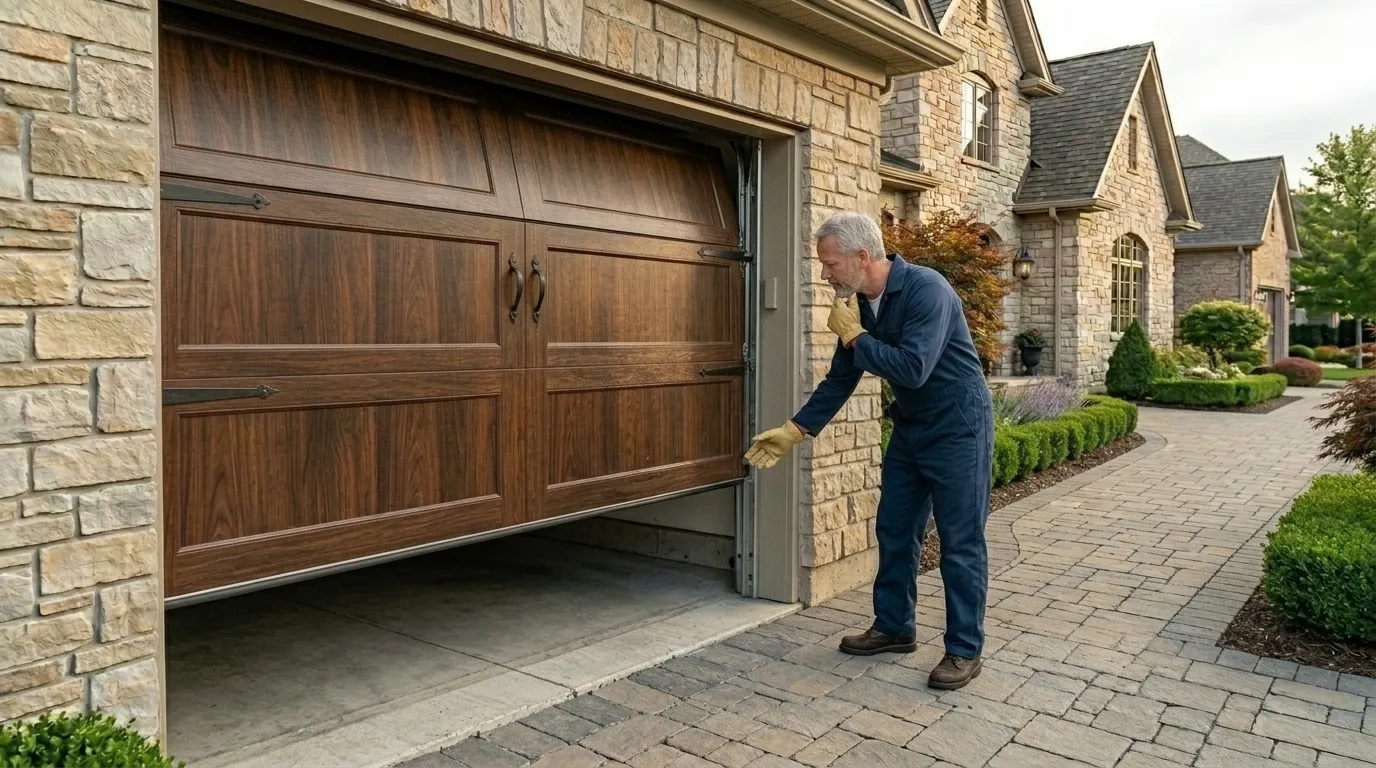
Before assuming the whole track needs replacing, look at three things. First, the bottom bracket where the vertical track meets the floor plate - on older installations this is often the first point to work loose from slab movement, and a bracket that's pulled even a quarter inch from the jamb will throw the whole run out of alignment. Second, check both tracks for a consistent gap against the door when it's closed; if one side sits tighter than the other, that's your slab-heave side.
Third, look at the rollers themselves - on houses from the 1960s-70s stock common around Dayton, original steel rollers have often gone this long without replacement, and a worn or flat-spotted roller will ride rough in a track that's otherwise fine. None of this requires taking the door apart. A flashlight and five minutes looking at the bottom three feet of each track tells you most of what you need to know before anyone touches a wrench.
The Situation
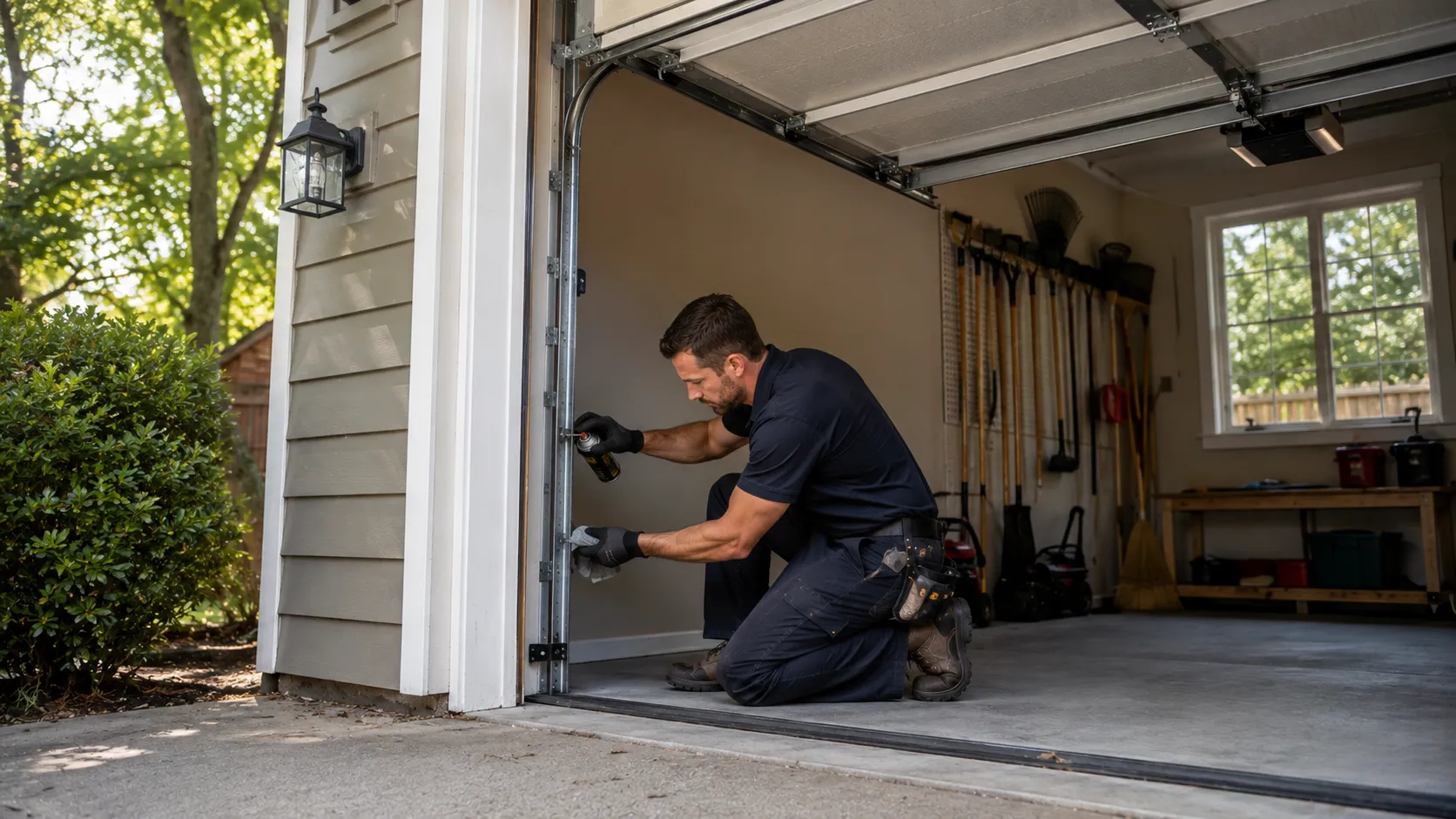
If the misalignment is limited to a loose bracket or a settled floor plate, that's usually a bolt-and-shim adjustment, not a teardown. If the track itself is bent - visibly bowed rather than just out of plumb - it needs to be replaced, because a bent rail will keep re-derailing rollers no matter how well you realign the bracket. We'd rather tell you it's a twenty-minute bracket fix than sell you a new track you don't need, and we'd rather tell you the track is shot than have it come off again in February.
Given how much of the housing stock around here dates to that 1960s-70s build era, a lot of these calls end up being the same root cause: original hardware meeting fifty-plus years of slab movement in a cold-severe climate. We work across the Dayton area, including the closer-in spots like Shiloh, Riverside, and Oakwood as well as farther out toward Xenia and Springboro.
How We Can Help
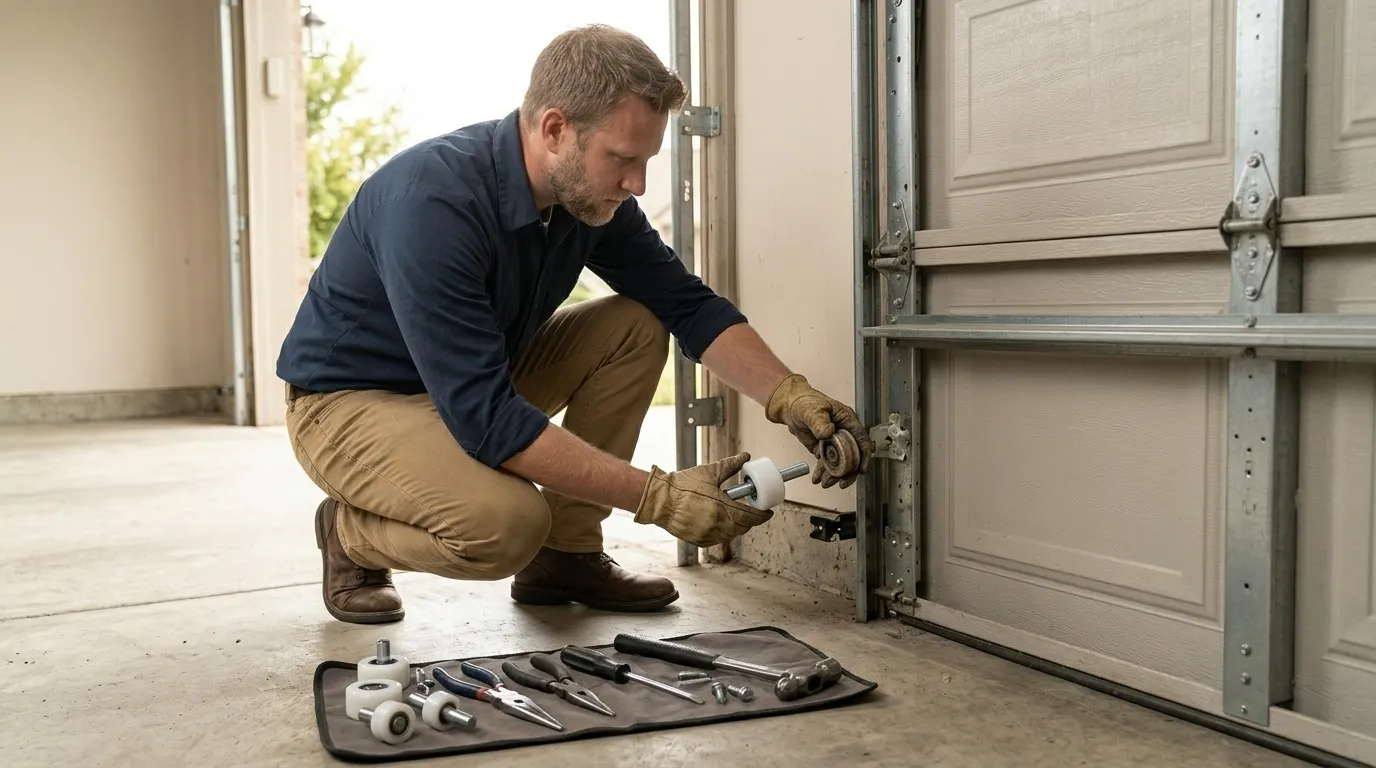
Garage Door Repair
Springs, cables, tracks, rollers, and openers fixed by a tech who explains the problem before touching anything.
Learn more →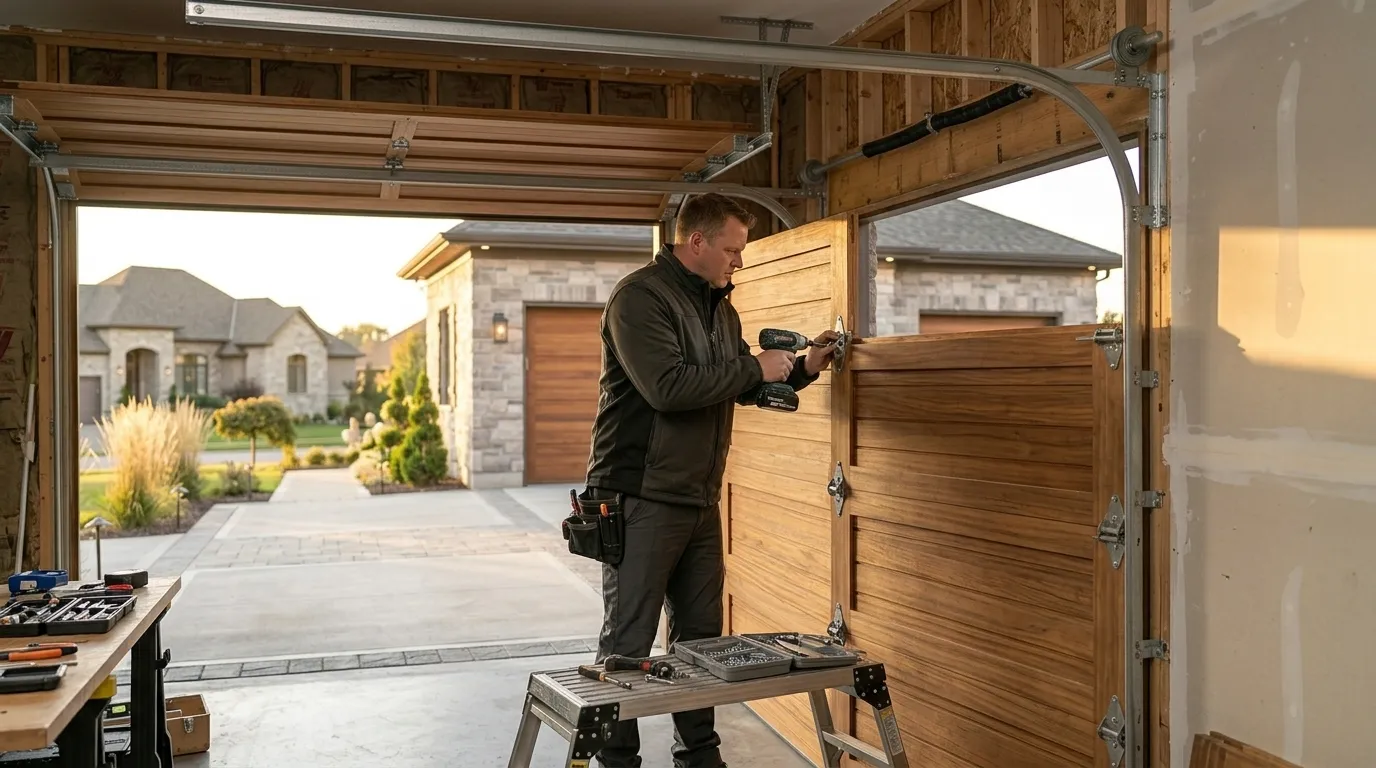
Garage Door Installation
New sectional doors sized and installed for the housing stock actually built in this area.
Learn more →
Garage Door Service
Tune-ups, lubrication, and safety checks that catch a small problem before it becomes a service call.
Learn more →Frequently Asked Questions
Can I push a garage door back onto its track myself?
You can sometimes reseat a roller that's barely off the track, but if the door has traveled any distance out of alignment, the spring is still under tension and the cables can slip. That's the point where a slipped cable meets a heavy door, and it's not a one-person job. If the door won't roll freely by hand with the opener disconnected, stop and call.
Why does my door only go off track in winter?
Dayton's cold-severe climate means real freeze-thaw cycling through the slab under your tracks. As the ground and slab shift with temperature swings, the vertical track brackets - especially on older installs - move just enough to throw off the roller path. Warmer months often ease it, but the underlying misalignment doesn't fix itself.
Is it worth repairing an old track or should I replace the whole thing?
If the bracket's loose or the track's out of plumb, that's usually a repair. If the rail itself is visibly bent or the house is on the older end of the 1938-1998 range with hardware that's never been upgraded, replacement is often the more honest answer - we'll tell you which one you're looking at before we start.
Have a Door That Needs a Second Opinion?
Call and describe what it is doing - we will tell you what it likely is.