
Dayton Garage Door Guide
Is Your Old Dayton Garage Door Worth Fixing
Dayton's housing stock runs 1938-1998, most from the 60s and 70s. Here's how to tell if your original door is worth repairing or past it, given our winters.
- Licensed & Insured
- Same-Area Service Calls
- Upfront Pricing
Leaving It Alone
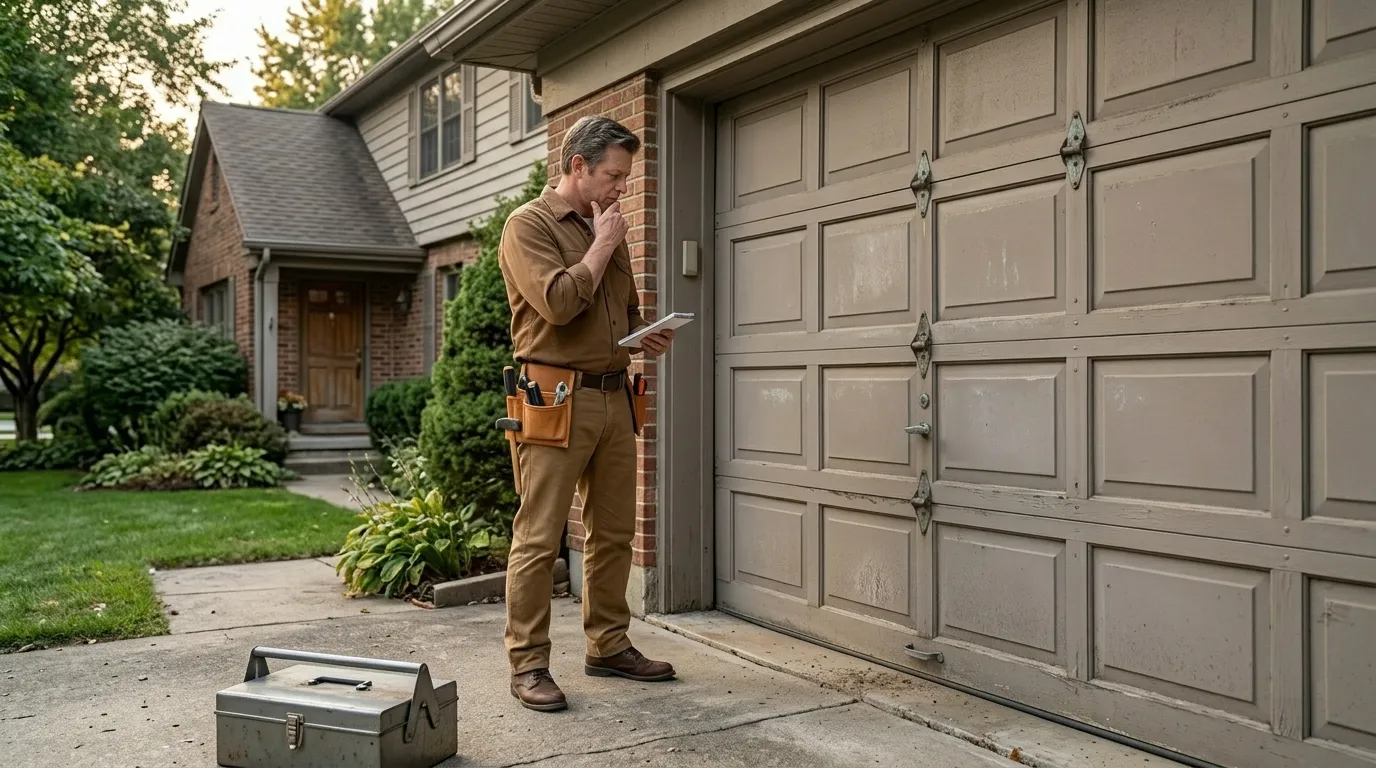
A lot of Dayton houses still have the door they were built with, and that's not always a problem. Housing in this service area went up mostly between 1938 and 1998, with the median landing around 1971 and the bulk of the stock from the 60s and 70s. A door from that era, if it's been kept dry and the hardware serviced, can still run fine.
The panels are often heavier gauge steel or solid wood than what gets installed today, and the tracks were set for a garage opening that hasn't changed. If the door still seals at the bottom, the springs cycle smoothly, and the opener - if there is one - doesn't strain, you don't need to replace anything. Swapping a working door for a new one because it looks dated is money spent on nothing.
The honest answer is that plenty of these old doors have another decade in them if the torsion spring and rollers are sound. Where it stops making sense is when the door itself has started working against the house rather than with it, which is a different question than how it looks.
What Local Conditions Do
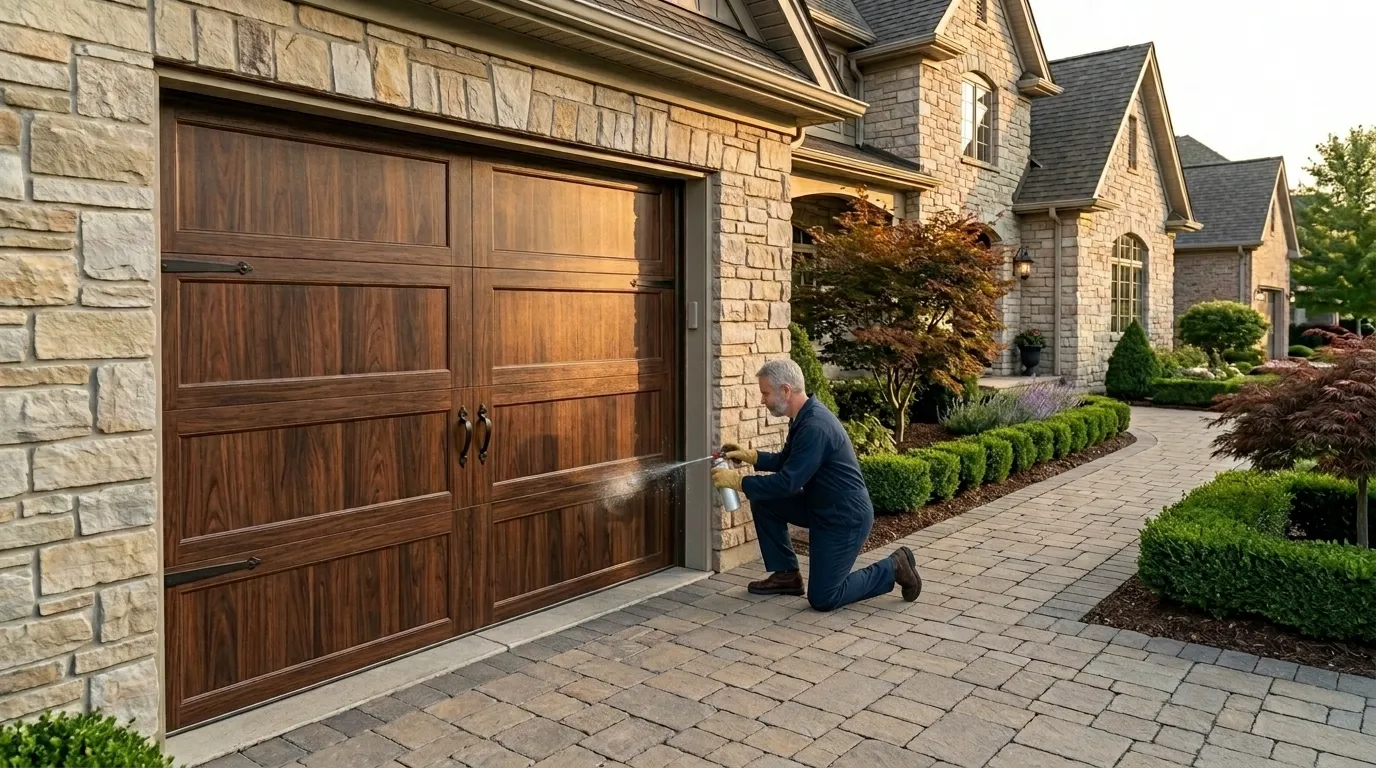
Dayton sits in a cold, severe climate band, and that matters more for a 50-year-old door than a new one. Steel panels from the 60s and 70s don't have the thermal break or insulation core that current doors use, so they take the freeze-thaw cycle directly. Repeated cold snaps flex old seams and warp panel sections, especially on doors that were never insulated to begin with.
Wood doors from that build era swell and shrink with the season, which loosens hinge screws and throws panels out of square over enough winters. None of this happens fast - it's why a door built when Nixon was president can still be standing - but it means the failure points on an older Dayton door are predictable: bottom panel rust-through from snowmelt sitting against it, hardened lubricant on 40-year-old rollers, and springs that were sized for the original door weight and are now fatigued from decades of cold-weather cycling. A door with the same age in a mild climate would show less of this.
Here, the cold does the wear.
What to Look At First
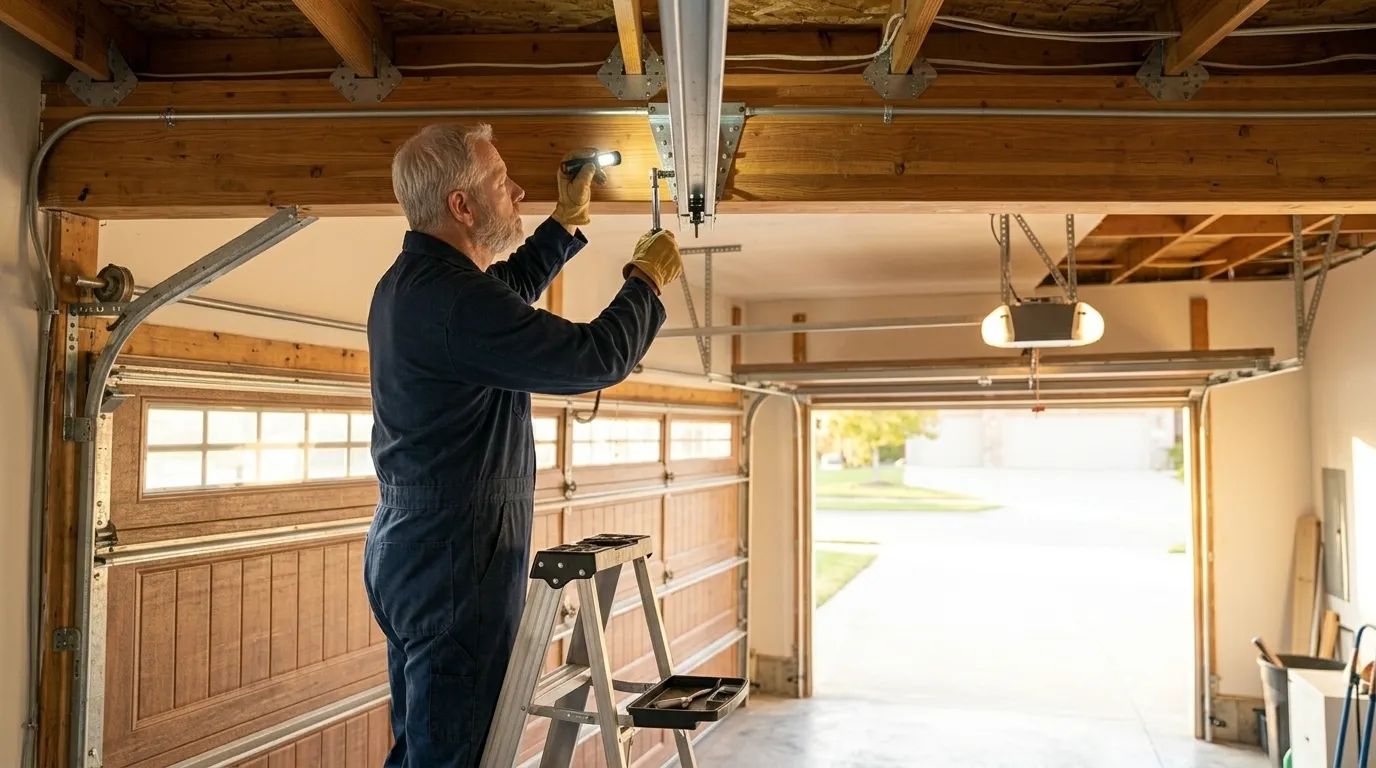
Start at the bottom panel, since that's where cold-weather moisture does the most damage on a door this old. Rust bubbling through the paint, or a bottom seal that's cracked and letting cold air track along the slab, tells you more than the door's age does. Next, check the torsion spring - if it's original to a house built in the 60s or 70s, it's well past any reasonable service life and a full cycle count.
A spring that looks fine can still be one cold morning from snapping. Rollers matter too: steel rollers on 40-plus year old track wear the track itself, and you'll see grooving or a door that jerks at certain points in its travel. Last, put a level against the door - homes from this era have settled enough that many openings are no longer square, and a door fighting a warped frame will burn out an opener fast.
If you find rot in the framing around the track, that's a repair that goes beyond the door itself, and it's the one thing we won't paper over with a service call.
The Situation
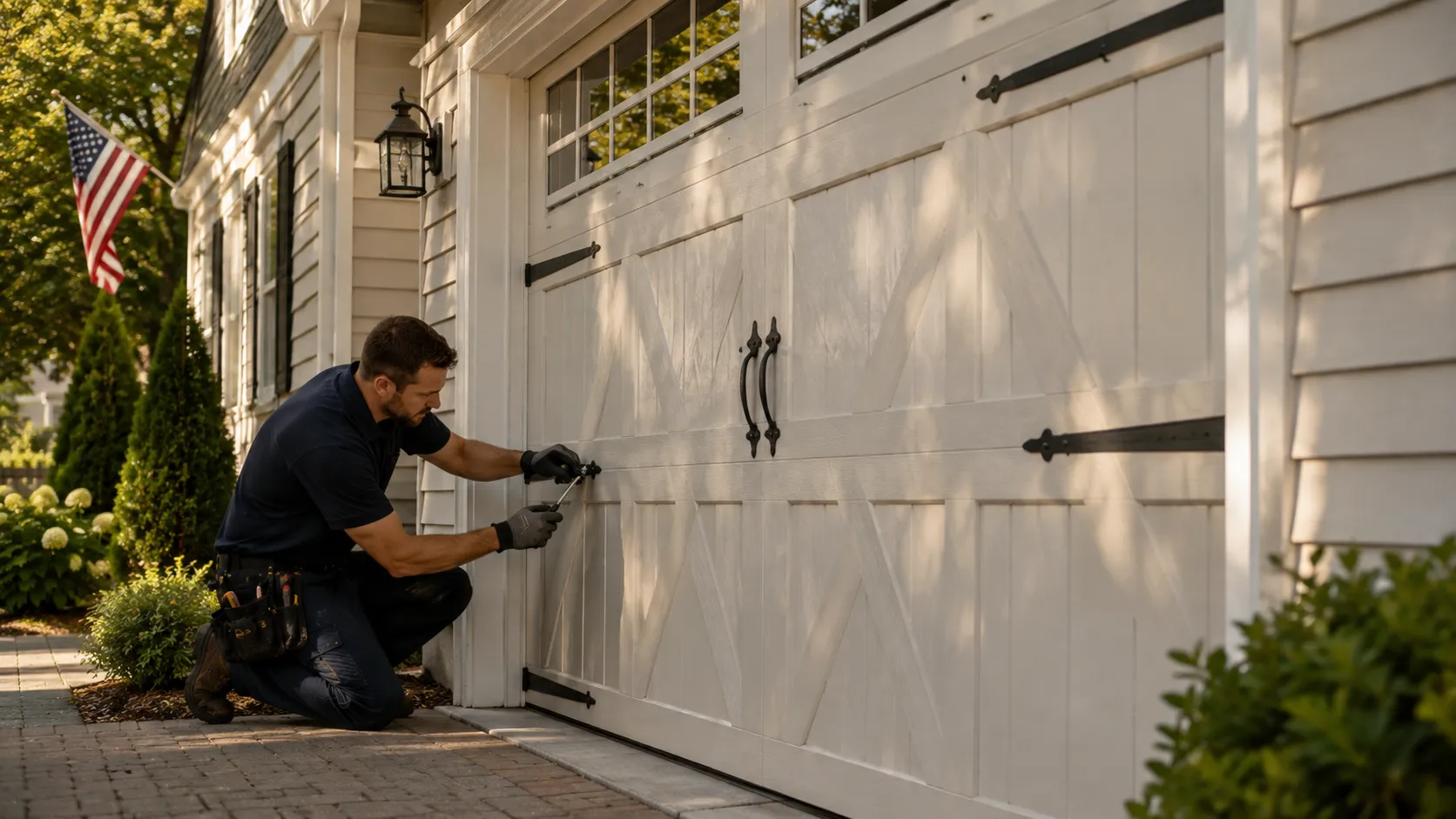
Across this area - 187,209 households and 93,639 owner-occupied houses, with median income around $70,000 - most people aren't looking to replace a door that's still doing its job. Fixing a spring, resealing the bottom, or swapping worn rollers on a door from the 60s or 70s is usually the right call and costs a fraction of a new install. Where we tell people to stop repairing is when the panel steel itself is thin from rust, or when the door has cycled through three or four spring failures because the opener and door were never matched to begin with.
At that point you're paying to patch a door that's fighting the cold every winter instead of holding against it. We'll look at the door in front of us and tell you which side of that line it's on - we don't have a blanket age cutoff, because a well-kept 1968 door can outlast a poorly maintained 2005 one.
How We Can Help
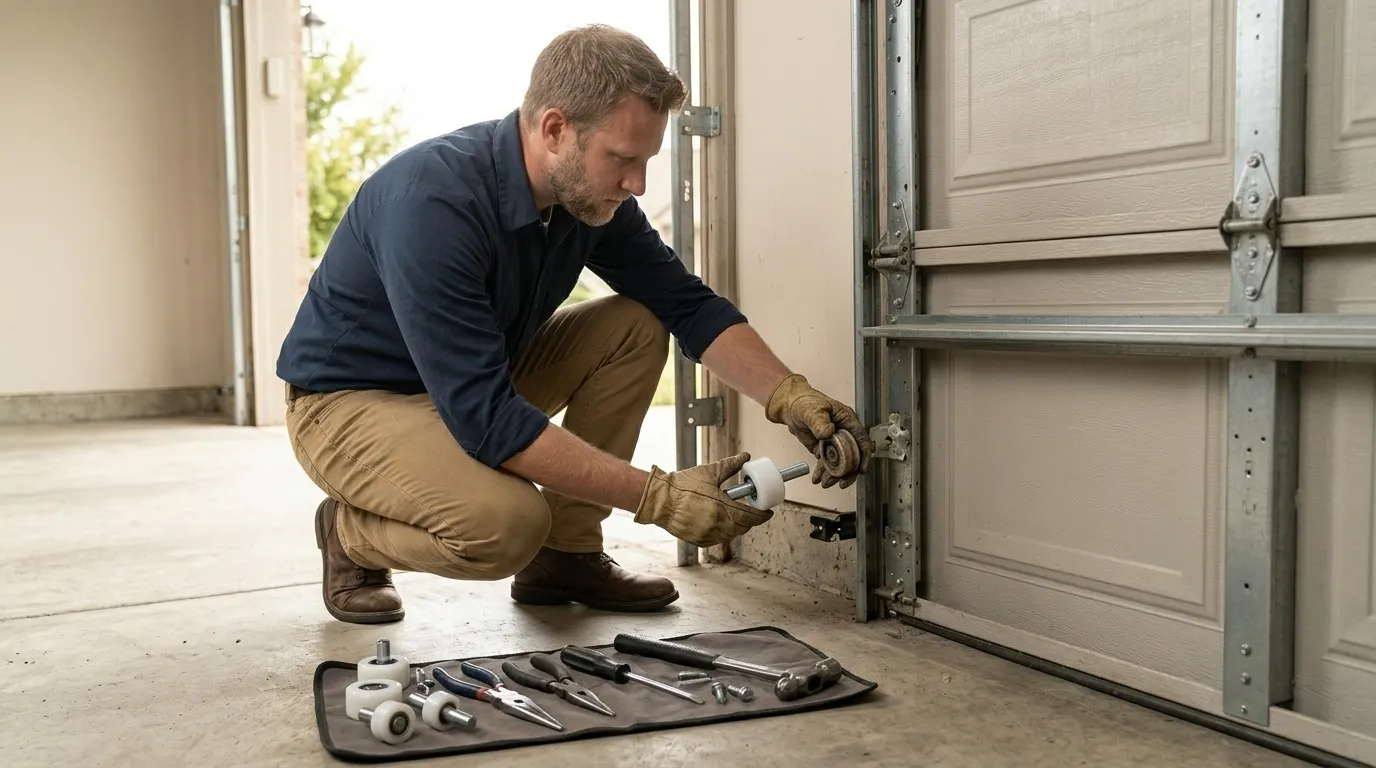
Garage Door Repair
Springs, cables, tracks, rollers, and openers fixed by a tech who explains the problem before touching anything.
Learn more →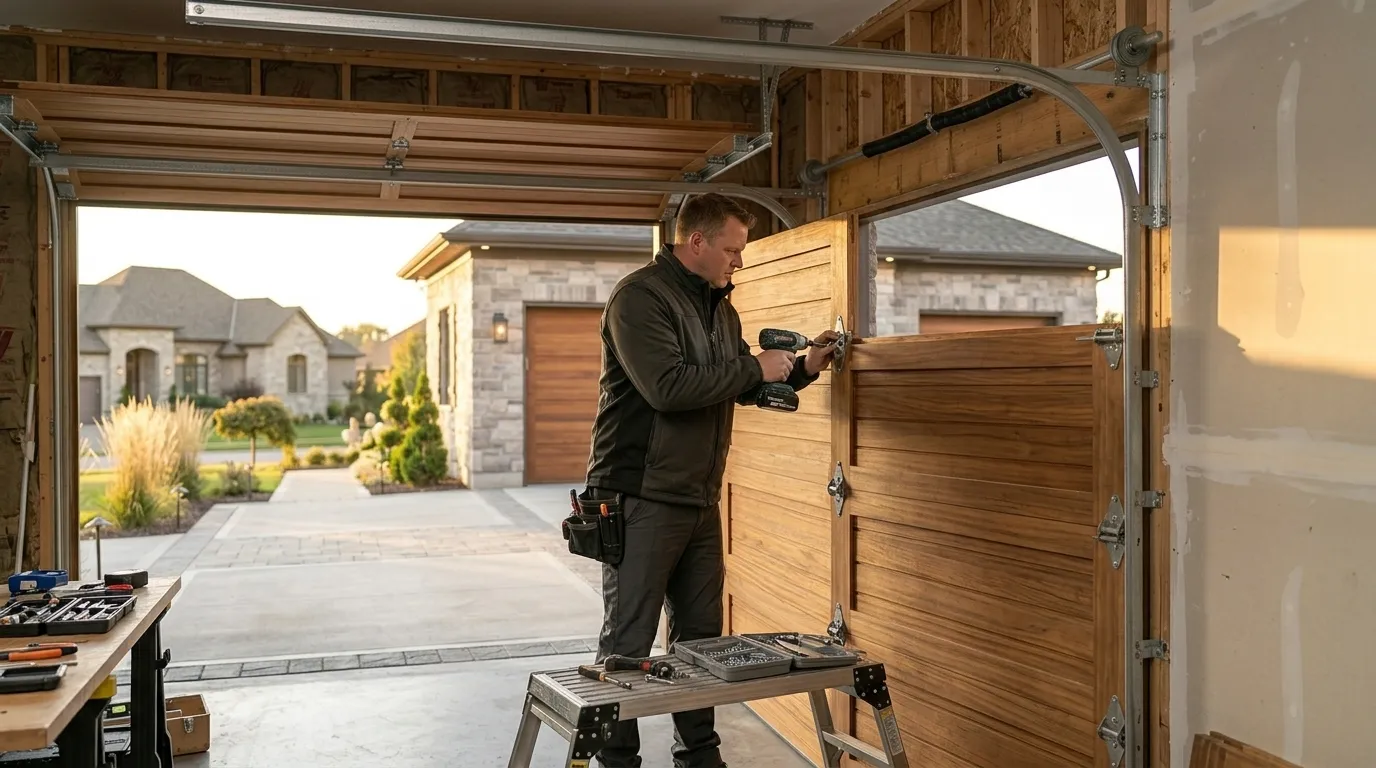
Garage Door Installation
New sectional doors sized and installed for the housing stock actually built in this area.
Learn more →
Garage Door Service
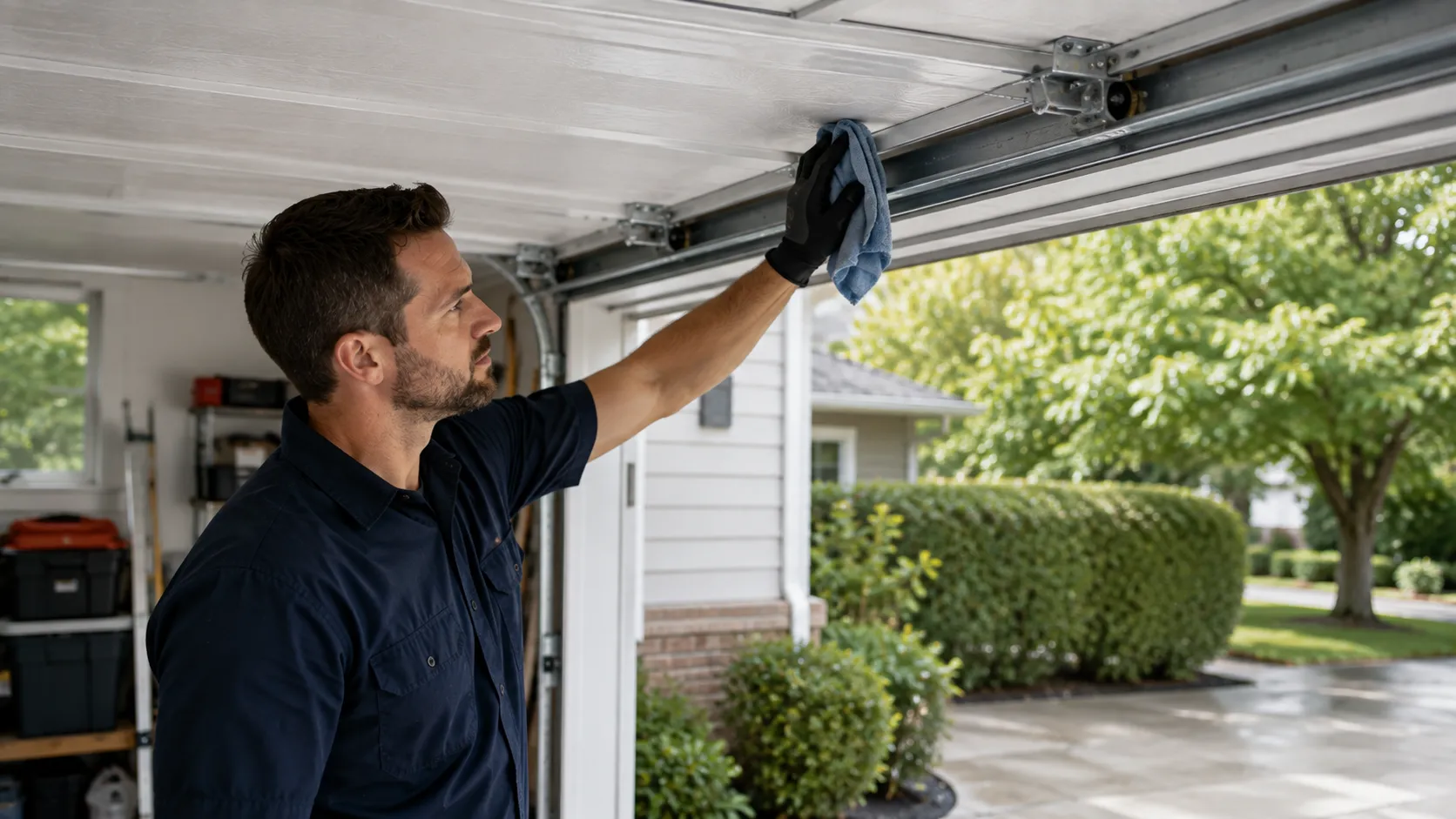
Tune-ups, lubrication, and safety checks that catch a small problem before it becomes a service call.
Learn more →Frequently Asked Questions
How old is too old for a garage door in Dayton
There's no fixed age. What matters is whether the panel steel is rusted through, the spring has failed repeatedly, and the frame has settled out of square - all more common on houses from the 1960s and 70s given our winters. A well-maintained door from that era can still be worth fixing rather than replacing.
Why do old doors fail more in winter here
Dayton's cold, severe climate puts older, uninsulated steel and wood doors through more freeze-thaw stress than they were built for. Seams flex, seals crack, and torsion springs fatigue faster from repeated cold-weather cycling, which is why bottom panel rust and spring failure show up earlier here than in milder places.
Is it cheaper to repair or replace an old door
For most original doors from the 60s-70s housing stock in this area, repairing a spring, seal, or rollers costs far less than full replacement and can add years of service. Replacement makes more sense once the panel steel itself is rusted through or the frame has settled out of square.
Have a Door That Needs a Second Opinion?
Call and describe what it is doing - we will tell you what it likely is.