
Dayton Garage Door Guide
The Noises Your Dayton Garage Door Makes, and What They Mean
Most Dayton garage doors sit on hardware installed when local houses went up between 1938 and 1998, and cold winters stress that gear in particular ways.
- Licensed & Insured
- Same-Area Service Calls
- Upfront Pricing
Leaving It Alone
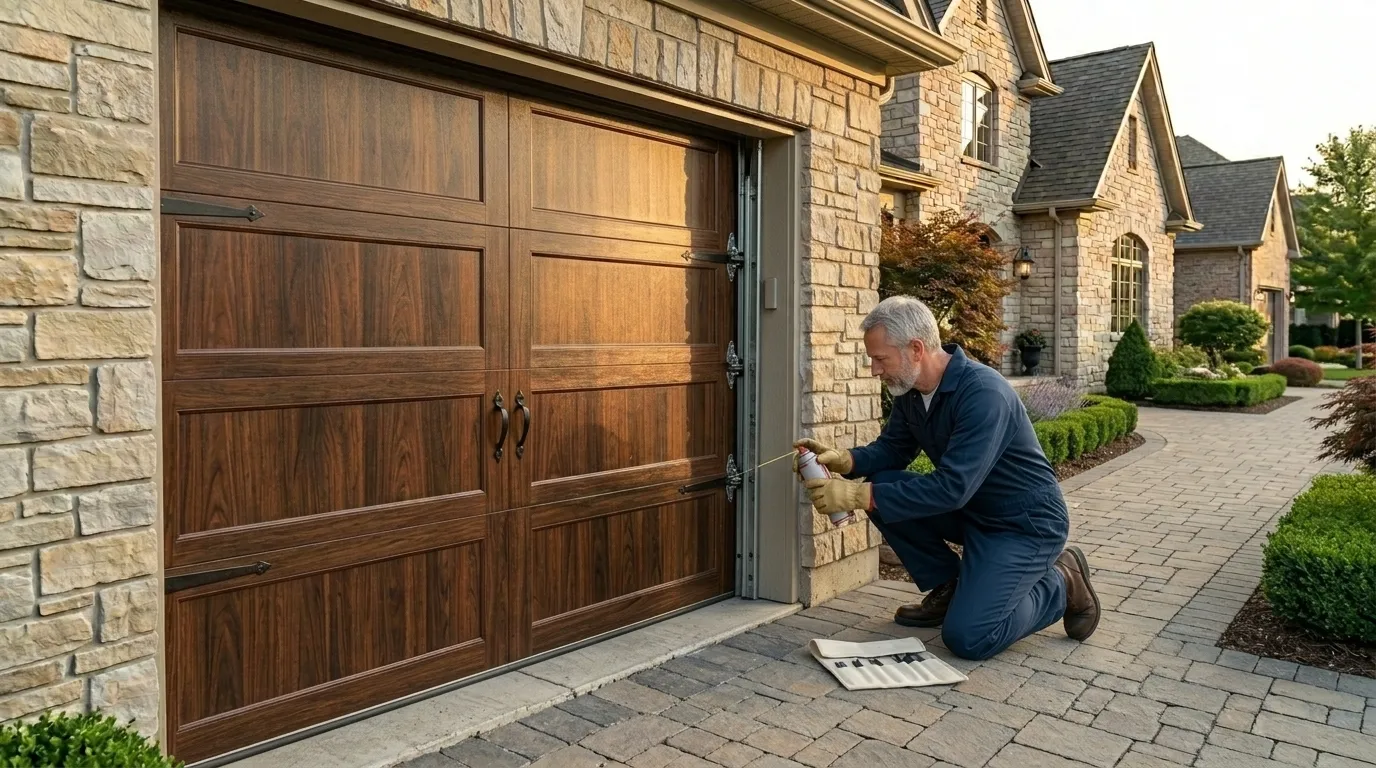
Not every sound is a job. A door that gives a short chirp on the first cold morning of the week and then runs quiet the rest of the day is usually just old grease doing what old grease does when the temperature drops. Steel contracts a little in the cold, hinges bind a little tighter, and a roller that's been fine for years will squawk once before it warms up and settles.
If the door opens all the way, closes all the way, and the sound doesn't change or get louder from one week to the next, you can leave it alone. Where we tell people to stop waiting is when the noise changes character - a squeal that turns into a bang, a hum that turns into a grind - or when it shows up mid-cycle instead of just at the start. We'd rather tell you a noise is nothing than send a truck for a five-minute lube job you could've done yourself with a can of white lithium grease.
That's the honest version: most of what you're hearing on a cold Tuesday morning is not an emergency, and treating it like one wastes your money.
What Local Conditions Do
Houses across this service area went up mostly between 1938 and 1998, with the median sitting around 1971, so a lot of what's bolted to your header is original hardware pushing fifty years old. That matters more here than it would somewhere with a milder winter, because Dayton's winters fall into the severe end of the cold band, which means the grease in an old roller bearing thickens enough some January mornings to make the door groan on the way up. Metal hardware installed in the 60s and 70s wasn't built with today's sealed bearings or synthetic lube - it was steel on steel, and decades of freeze-thaw cycles work on the fasteners, the hinge pins, and the spring coils in ways that show up as sound before they show up as failure.
A track that's slightly out of alignment makes a scraping noise that's louder in cold weather because the metal has contracted just enough to bind. None of this is exotic. It's what happens to hardware this old in a climate this cold, and it's why the same noise on a 2015 build somewhere warmer would mean something different than it does on a 1968 build here.
What to Look At First
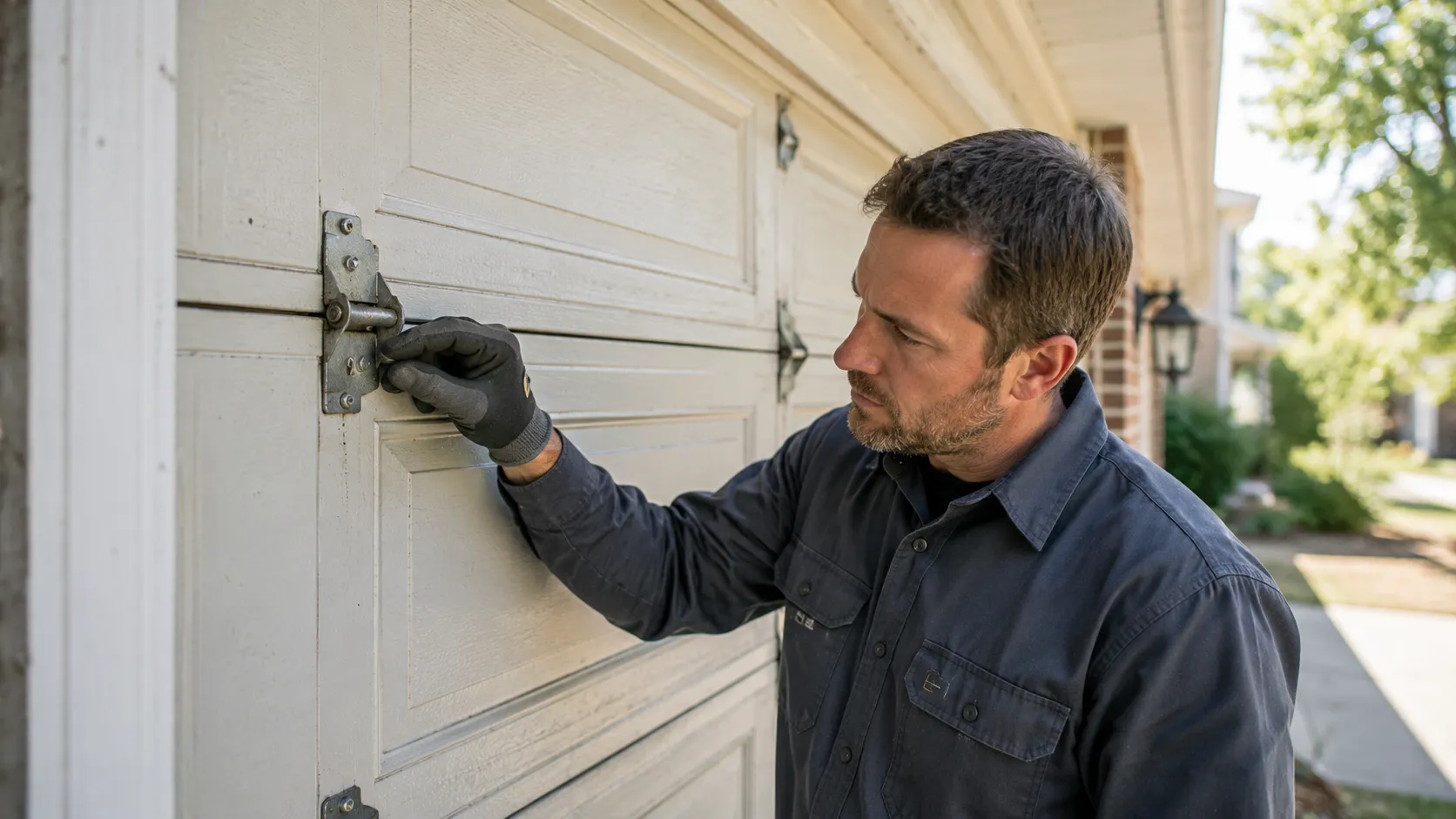
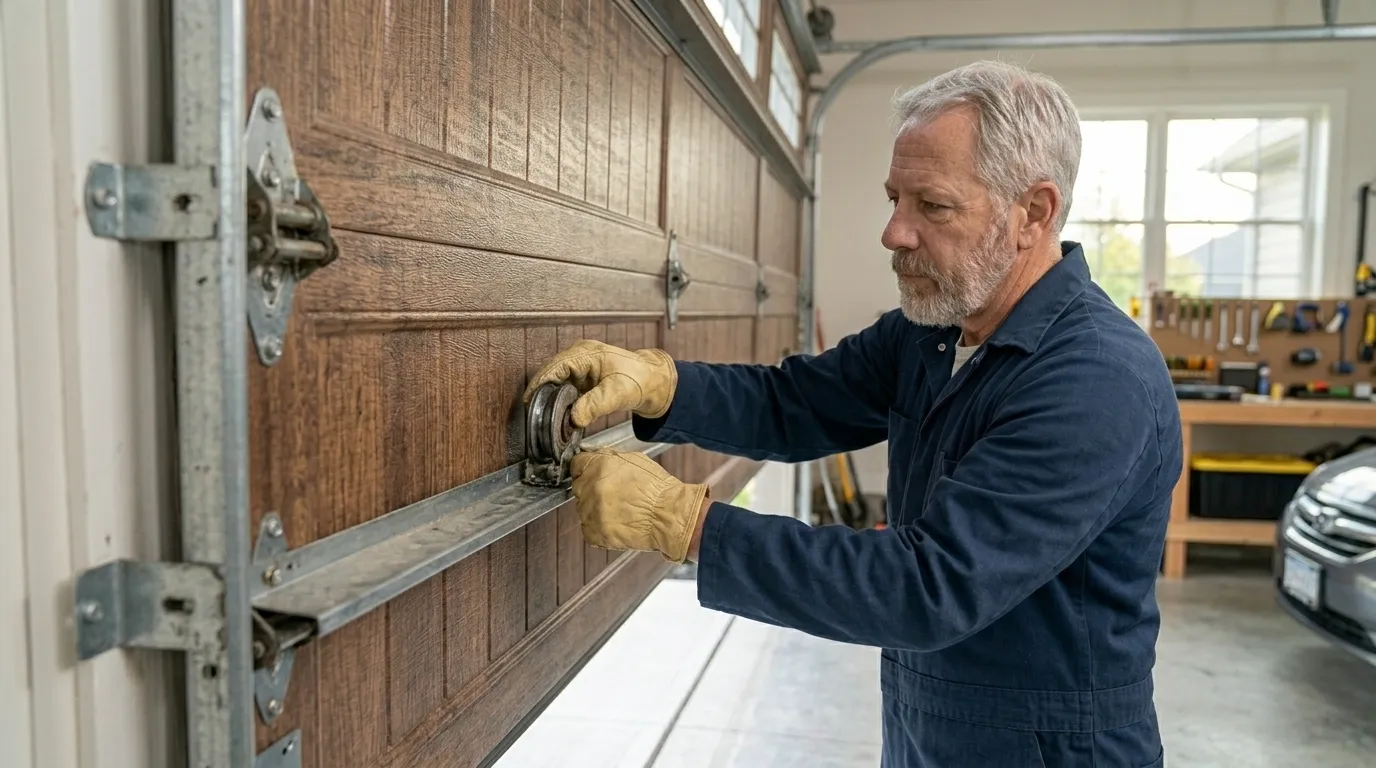
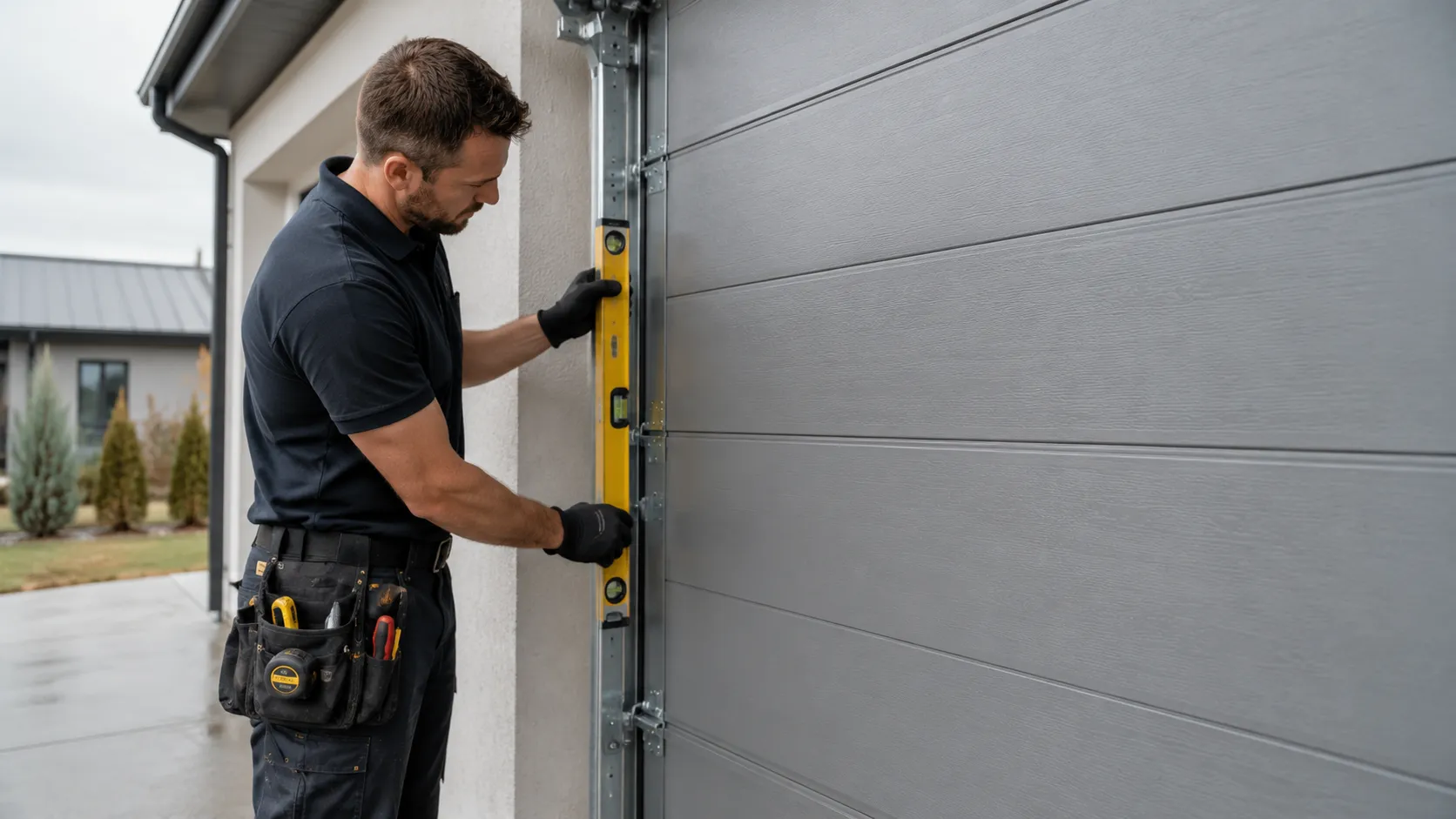
Before you call anyone, look at three things. First, the rollers - a door installed when the neighborhood was built in the 1960s or 70s is more likely to be running steel rollers on an extension-spring setup than the torsion systems that came standard later, and steel rollers are the loudest part of an old door once the grease dries out. Second, the hinges between panels; a dry hinge makes a rhythmic squeak that repeats once per roller pass, which is different from a spring noise that happens once per cycle.
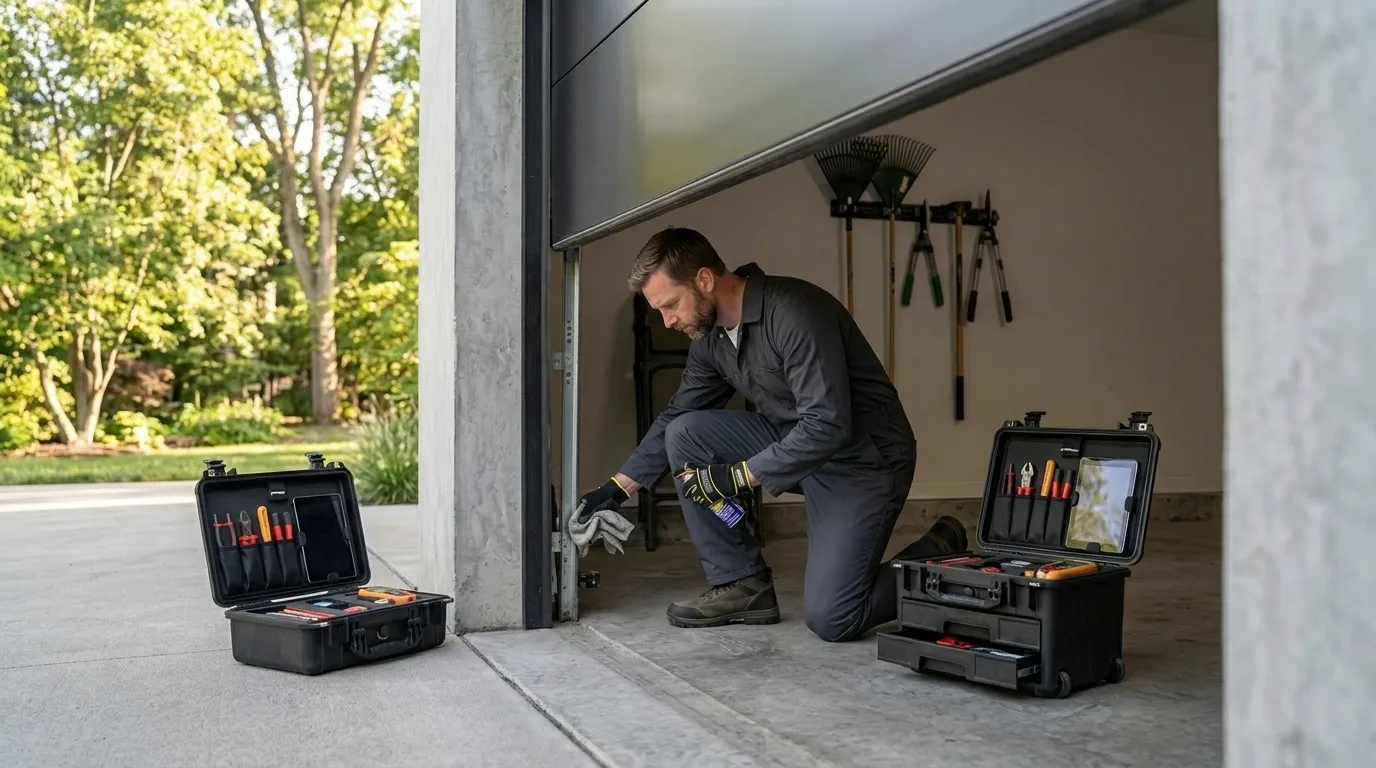
Third, listen for where in the cycle the noise happens - right at the start (springs), all the way through (rollers or track), or right at the end (the opener's gears or the door hitting the floor stop). Write down when it happens and what it sounds like before you call.
The Situation
placeholder
How We Can Help
Garage Door Repair
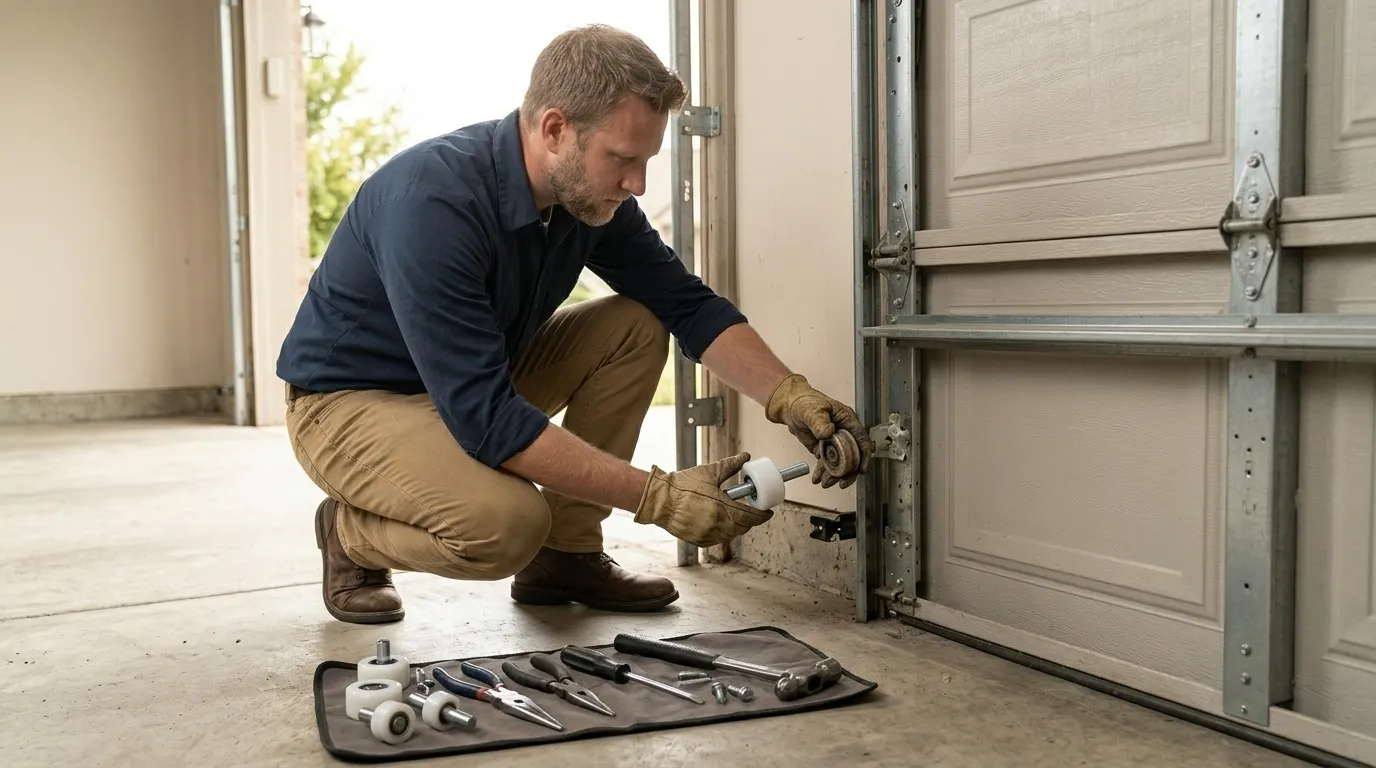
Springs, cables, tracks, rollers, and openers fixed by a tech who explains the problem before touching anything.
Learn more →
Garage Door Installation
New sectional doors sized and installed for the housing stock actually built in this area.
Learn more →
Garage Door Service
Tune-ups, lubrication, and safety checks that catch a small problem before it becomes a service call.
Learn more →Frequently Asked Questions
placeholder
placeholder
Have a Door That Needs a Second Opinion?
Call and describe what it is doing - we will tell you what it likely is.