
Dayton Garage Door Guide
What a Service Call Actually Covers Here in Dayton
A look at what a Dayton garage door service call actually checks, tied to this area's 1960s-70s housing stock and severe cold winters, not a generic checklist.
- Licensed & Insured
- Same-Area Service Calls
- Upfront Pricing
Leaving It Alone
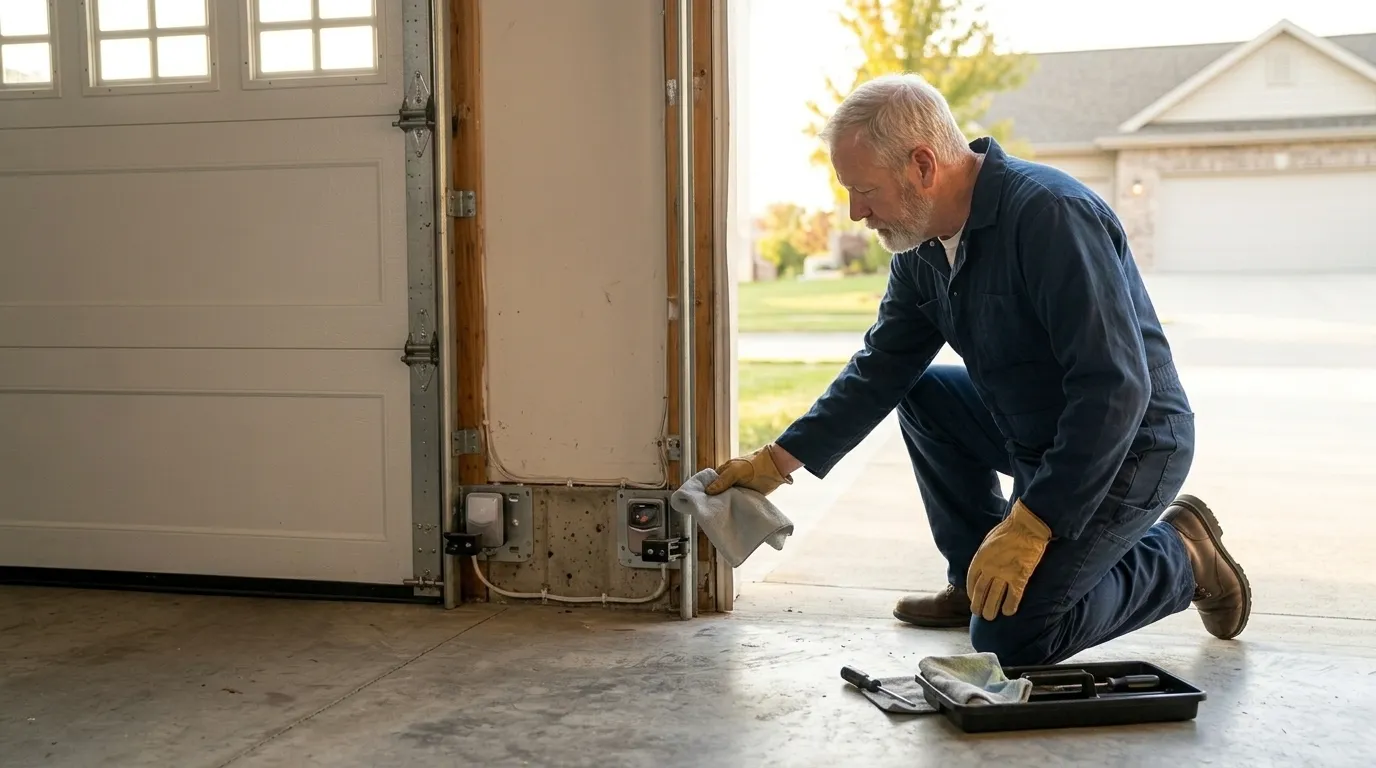
Not every noise means a truck needs to come out. A door that's been quiet for twenty years and starts a light rattle in January is usually just cold metal moving the way cold metal does - that's not a call, that's a Tuesday. Where we draw the line: if the door still opens and closes on one press of the button, tracks smoothly, and the spring isn't visibly gapped, you can wait.
Dayton's housing stock runs old - median build year 1971, with most of the 37 named areas we cover built out in the 1960s and 70s - and a lot of these original doors have been running for decades with nothing but a can of spray lube. That's fine. Leaving a working door alone costs nothing.
Calling out a tech to look at a door that isn't broken costs you a service fee for a diagnosis you could've made yourself by watching it cycle twice. We'd rather tell you it's fine over the phone than bill you to hear the same thing in your driveway.
What Local Conditions Do
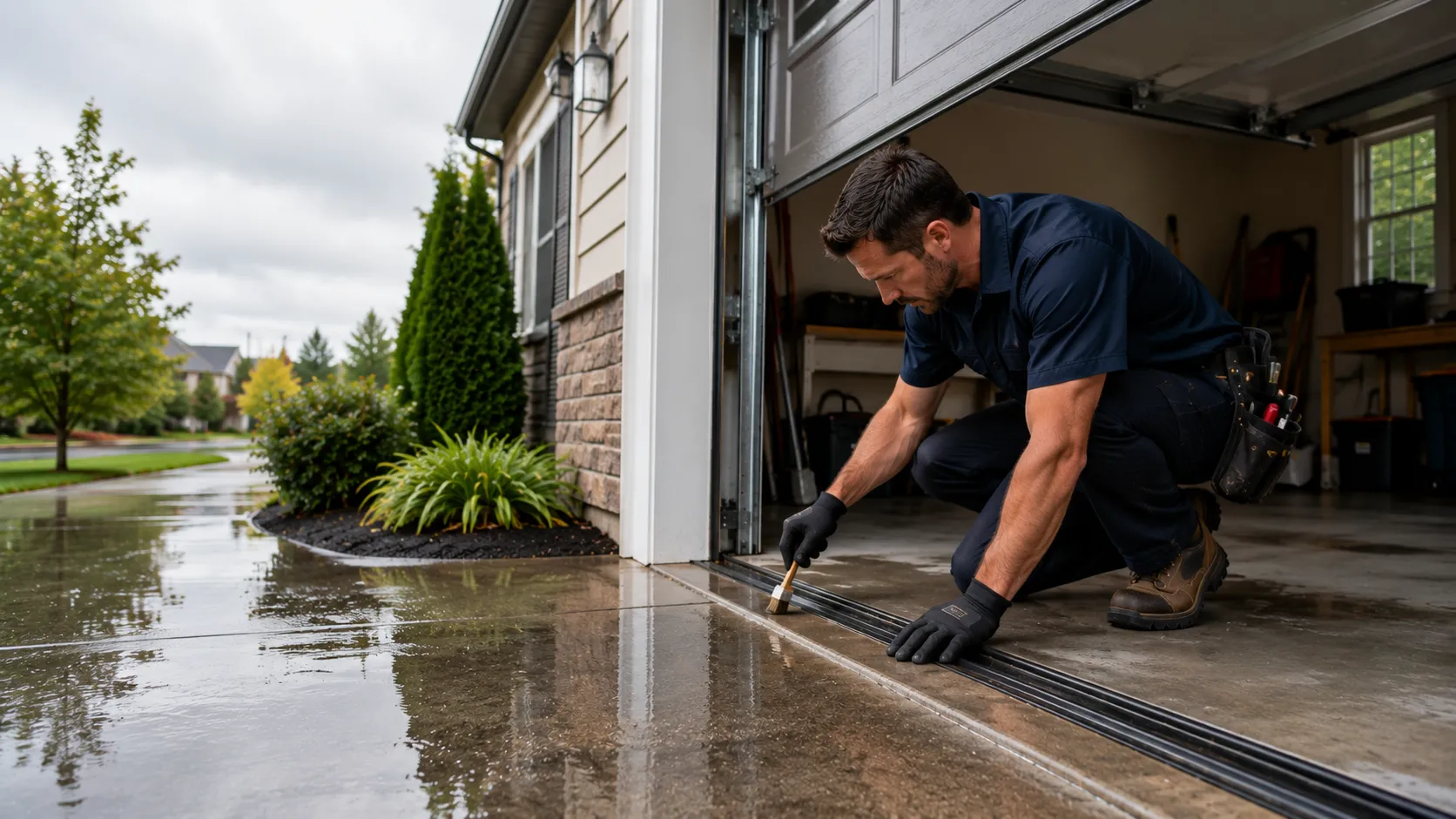
Dayton sits in a severe cold climate band, and that matters more for garage doors than most people think. Steel contracts in the cold, which tightens tolerances on tracks and rollers that were set to spec decades ago on doors from that 1938-1998 housing wave. Torsion springs lose a measurable amount of lift in deep cold, so a spring that was already near the end of its cycle count in October can feel noticeably heavier by February - that's not the spring failing today, that's the spring failing on a schedule the cold just moved up.
Nylon rollers get brittle and can crack rather than wear down gradually. None of this is unique drama; it's what happens to 50-plus-year-old hardware in a place that gets real winters. What it means practically: a call in January isn't diagnosing the same problem as the identical symptom in July, even on the same door.
What to Look At First
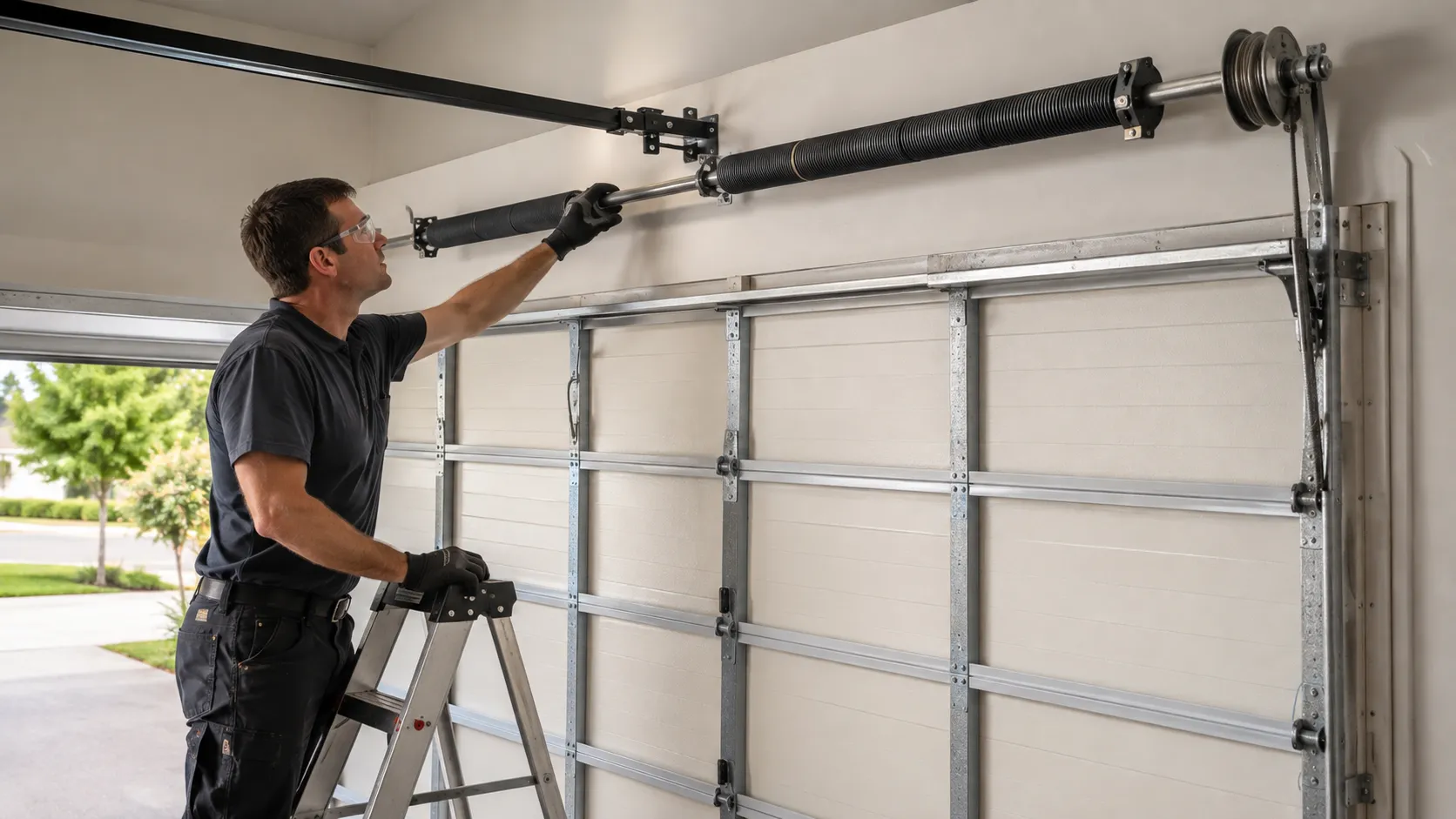
Before you call, look at three things. First, the spring - one long spring above the door (torsion) or two shorter ones on either side. Gaps between coils, or a spring that looks stretched compared to its resting shape, means it's near the end.
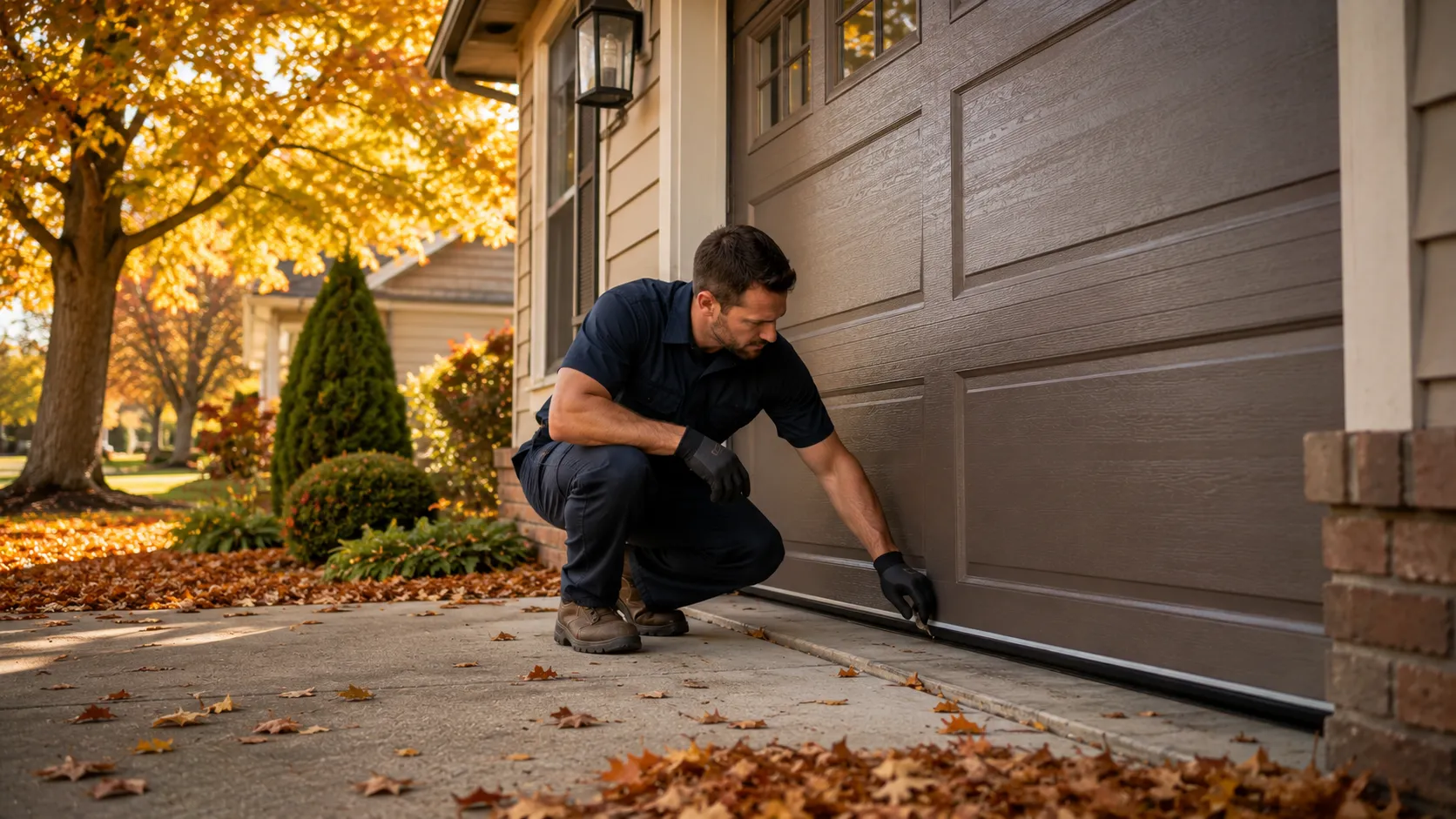
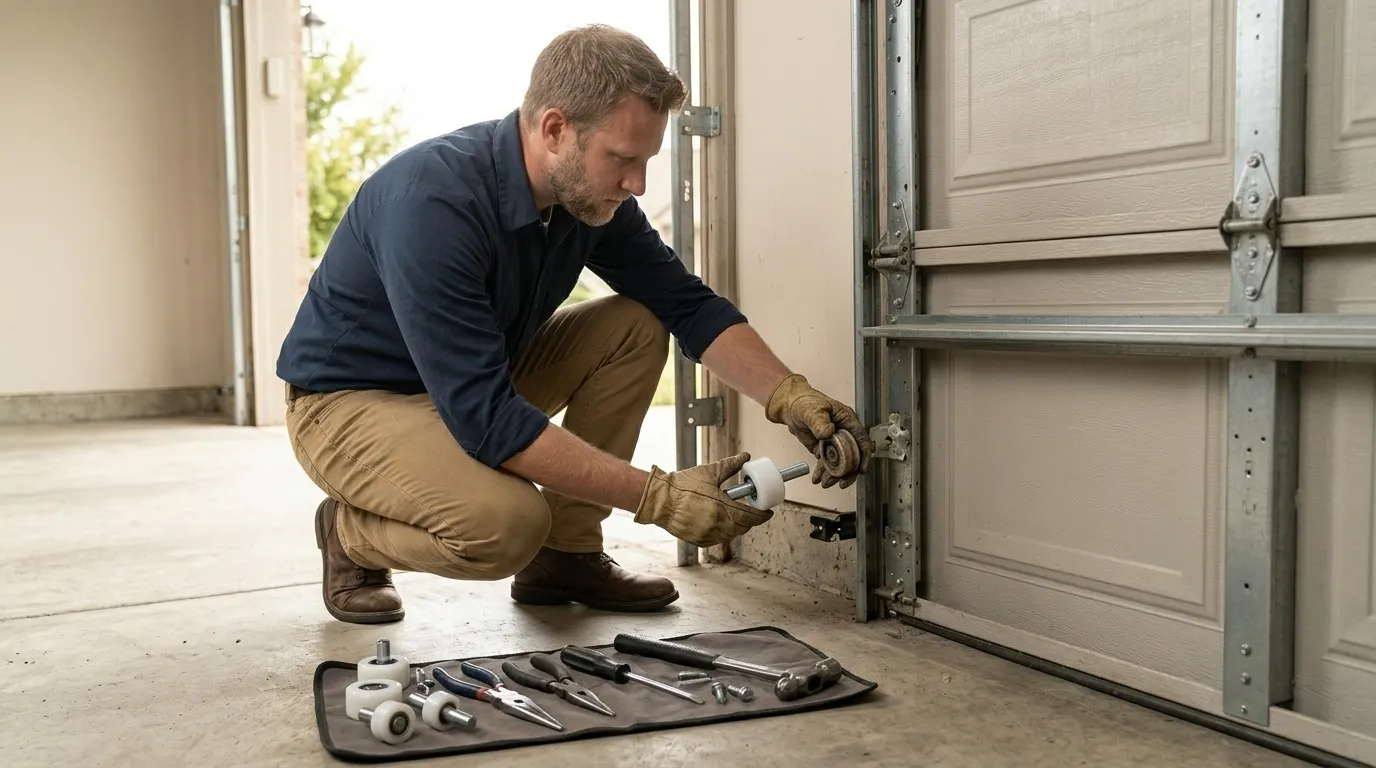
Second, the tracks - with housing this age, a lot of these were installed with hardware that's since gone slightly out of square as the house settled; look for a track that pulls away from the wall or bends at a seam. Third, the rollers themselves, especially if they're the original nylon ones - cracks or flat spots on a roller are the kind of thing that gets worse fast once cold weather starts working on the plastic. If you see any of those three, that's worth a call.
If what you've got is just noise with no visible damage, it's worth is a garage door service video played through your phone speaker before you decide.
The Situation
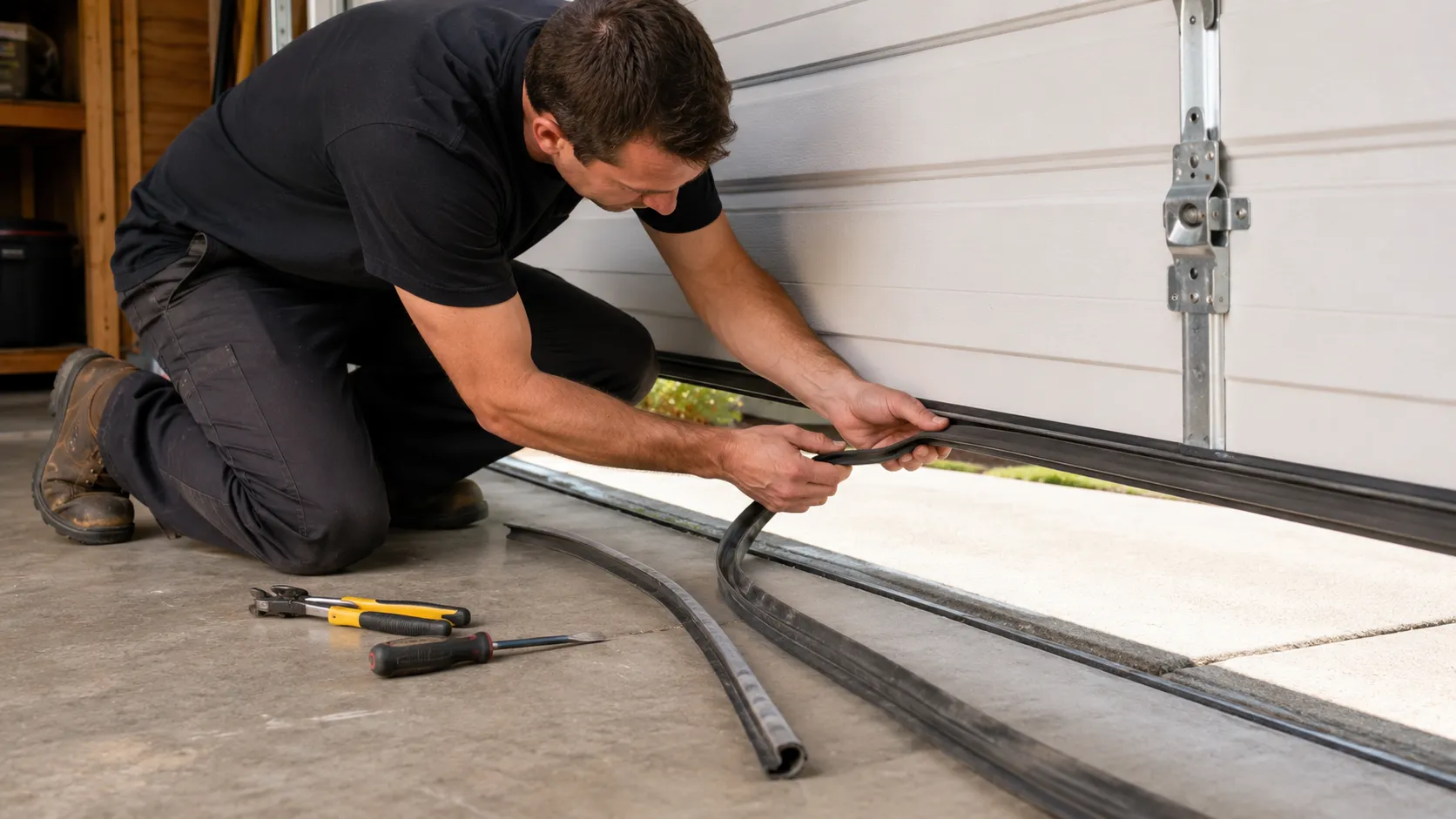
Here's the honest limitation: on doors from the older end of that 1938-1998 build range, some original hardware isn't available anymore, and a repair on a 1960s track system sometimes means replacing more of the assembly than the customer expected, because the old parts and new parts don't share dimensions. We'll tell you that on-site before doing work, not after.
With 93,639 owner-occupied houses across this service area and a median household income around $70,000, most people we see are trying to get one more decade out of a door, not replace it outright - that's a reasonable goal on most jobs, and we'll say so if it's realistic on yours. When it isn't, replacement usually costs less over time than repeated patch repairs on hardware that's fighting Dayton winters every year it stays in.
How We Can Help
Garage Door Repair
Springs, cables, tracks, rollers, and openers fixed by a tech who explains the problem before touching anything.
Learn more →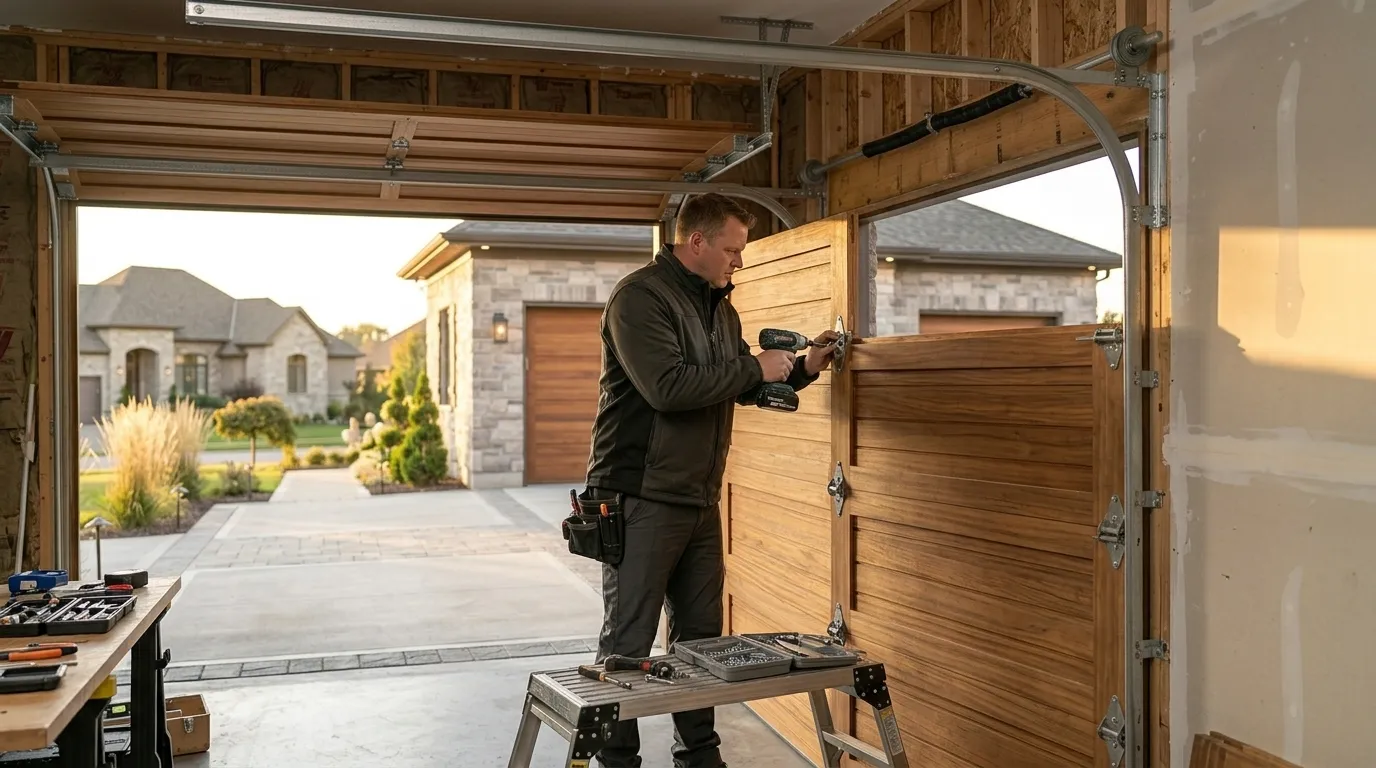
Garage Door Installation
New sectional doors sized and installed for the housing stock actually built in this area.
Learn more →
Garage Door Service
Tune-ups, lubrication, and safety checks that catch a small problem before it becomes a service call.
Learn more →Frequently Asked Questions
How often should I get my garage door serviced in Dayton?
There's no fixed interval that fits every door, but given how many houses here date to the 1960s and 70s, we'd rather you call when you notice a change - new noise, new resistance, visible spring gap - than on a calendar schedule. Severe cold winters accelerate wear on old hardware, so pay closer attention going into November.
Why does my garage door get harder to open in winter?
Cold steel and cold springs both stiffen up, and Dayton's winters are real ones. A torsion spring near the end of its life often shows it first in cold weather, even though the spring's actual wear happened gradually over the whole year. It's usually a sign to get it looked at, not ignored.
Is it worth repairing an original door from a 1960s or 70s house?
Often yes, if the track and drum are intact and the spring or roller is the only issue. Where it stops being worth it is when the original hardware is worn enough that a repair requires replacing dimensions that no longer match what's manufactured today - at that point we'll tell you plainly.
Have a Door That Needs a Second Opinion?
Call and describe what it is doing - we will tell you what it likely is.