Getting Hold of Us
Call 19375885272 and tell us what the door is doing, or not doing. A quote over the phone is a starting point, not a final number, because two doors that look the same from the driveway can have completely different hardware behind the trim. If you'd rather send details first, you can reach us through our site at /.
What helps most on the call: the size of the door (single or double), whether it's got one spring or two, whether the opener is chain-drive or belt, and roughly how old the house is. Dayton's housing stock runs mostly 1938 to 1998, with a lot of it built in the 1960s and 70s across the named areas we cover, so a lot of doors out here are on original torsion hardware that newer parts don't always match. If you know the age of your house, tell us - it saves a trip for the wrong spring size.
We don't do same-call pricing on anything that needs a look. A rattling track might be a $40 fix or a sign the whole assembly needs replacing, and we're not going to guess on your driveway.
What We Actually Do
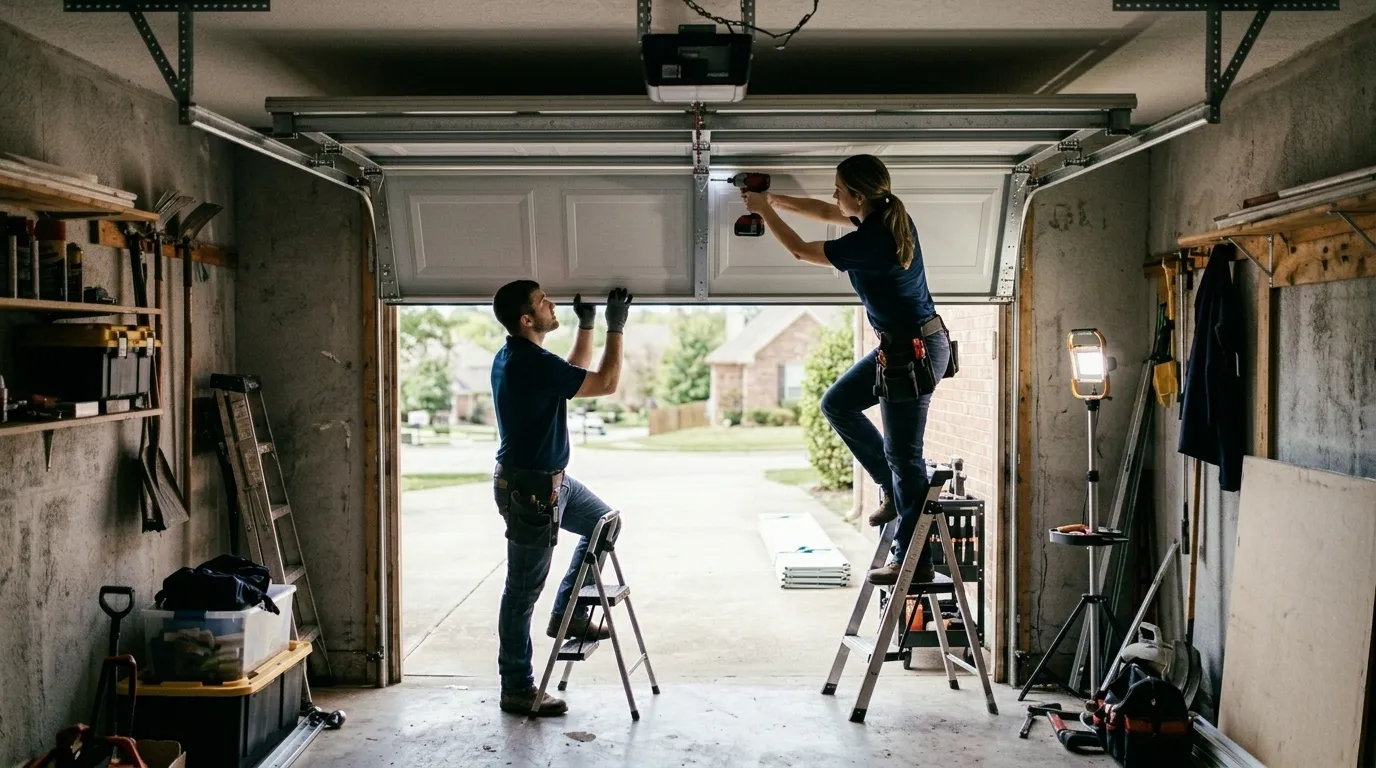
We work on residential garage doors: torsion and extension springs, cables, rollers, tracks, panels, and openers. Broken spring on a double door, a cable that's jumped the drum, an opener that runs but won't lift the door all the way - that's the bulk of the calls.
What we can't price sight unseen is anything structural: a bent track that's pulled away from the jamb, a door that's been hit and racked out of square, or hardware old enough that the parts aren't made anymore. Dayton's median house age is 1971, and a door original to a house that age is often running on brackets and drums that current stock doesn't replace one-for-one. Sometimes the honest answer is that a repair costs more than putting in a new door, and we'll say that rather than patch something that'll fail again in six months.
Winters here get cold enough that steel contracts, hardware stiffens, and springs under tension are more likely to let go on a frozen morning than a mild one. That's a climate fact, not a sales pitch - it's why late-season spring calls tend to cluster.
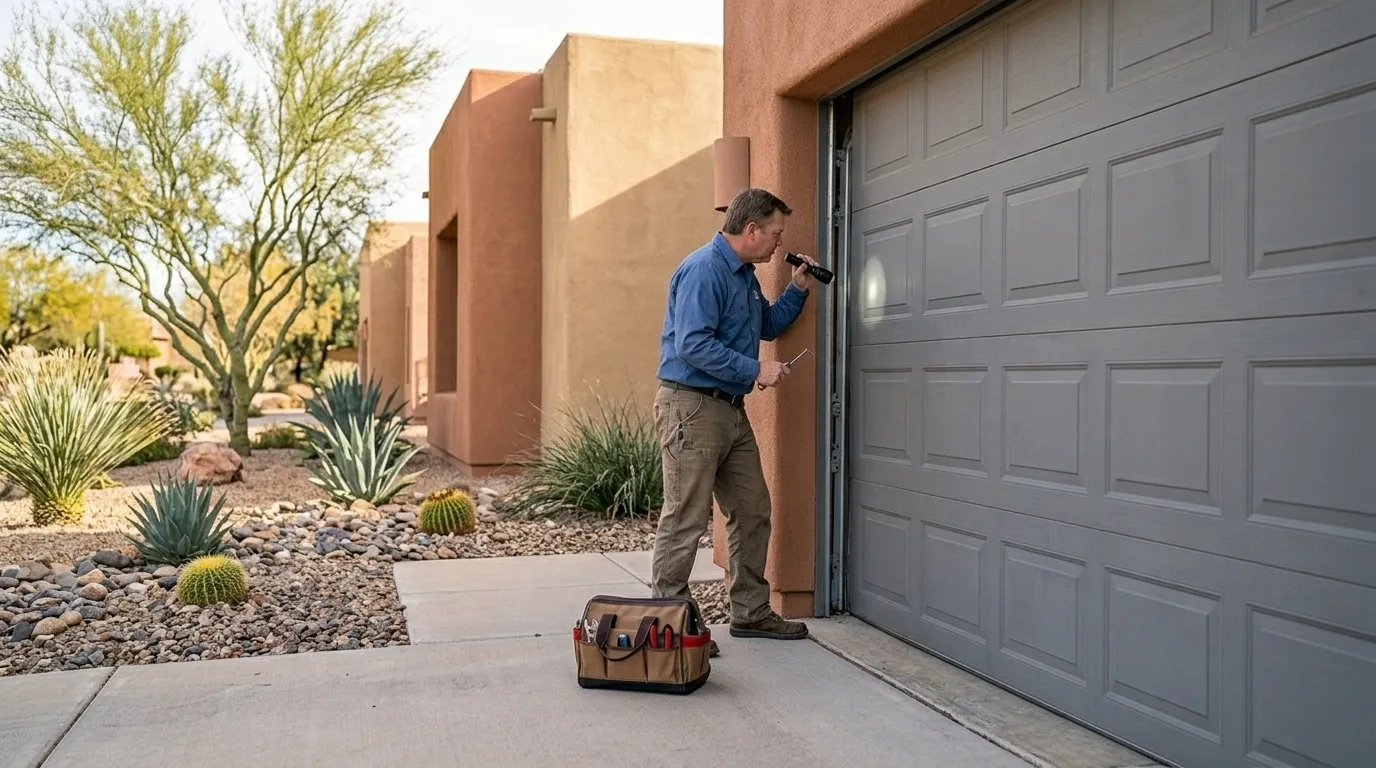
Where We Work
We're based on Needmore Rd and work Dayton and the towns around it: Shiloh, Riverside, Oakwood, Moraine, Trotwood, Vandalia, Kettering, Huber Heights, Englewood, West Carrollton, Clayton, Union, Fairborn, New Lebanon, Miamisburg, Bellbrook, Brookville, Tipp City, Germantown, West Milton, New Carlisle, Enon, Xenia, Springboro, Five Points, Carlisle, Spring Valley, Yellow Springs, Franklin, and Wilberforce, plus close-in areas like McCook Field, Downtown, and Midtown Dayton.
Distance matters for scheduling, not for whether we'll come. A job three miles out in Shiloh and one sixteen miles out in Springboro both get the same attention once we're there, but if you're near the far edge of that list, say so when you call - it affects which slot we can offer you that day.
Who Turns Up
Someone who knows torsion springs from extension springs and can tell you which one your door has before touching a wrench. That's the honest version of this section. We're not going to invent a founding year or a headcount to make the page feel bigger than it is.
What we can tell you: the service area covers roughly 187,000 households and about 93,600 owner-occupied houses, with a median household income around $70,000. That's the kind of area we're built to serve - mostly single-family homes, mostly older housing stock, mostly people who want the door fixed right and not sold a new one they don't need.
If a job is a straightforward spring swap, we'll tell you that on-site before starting. If it's more than that, we'll explain what we're seeing and what the options are, including the option of doing nothing yet.