
Dayton Garage Door Guide
Cold Weather and Older Springs in Dayton, Ohio
Dayton homes built mostly from 1938 to 1998 face cold-weather spring failures on original hardware. Here's what to check before calling for repair work.
- Licensed & Insured
- Same-Area Service Calls
- Upfront Pricing
Leaving It Alone
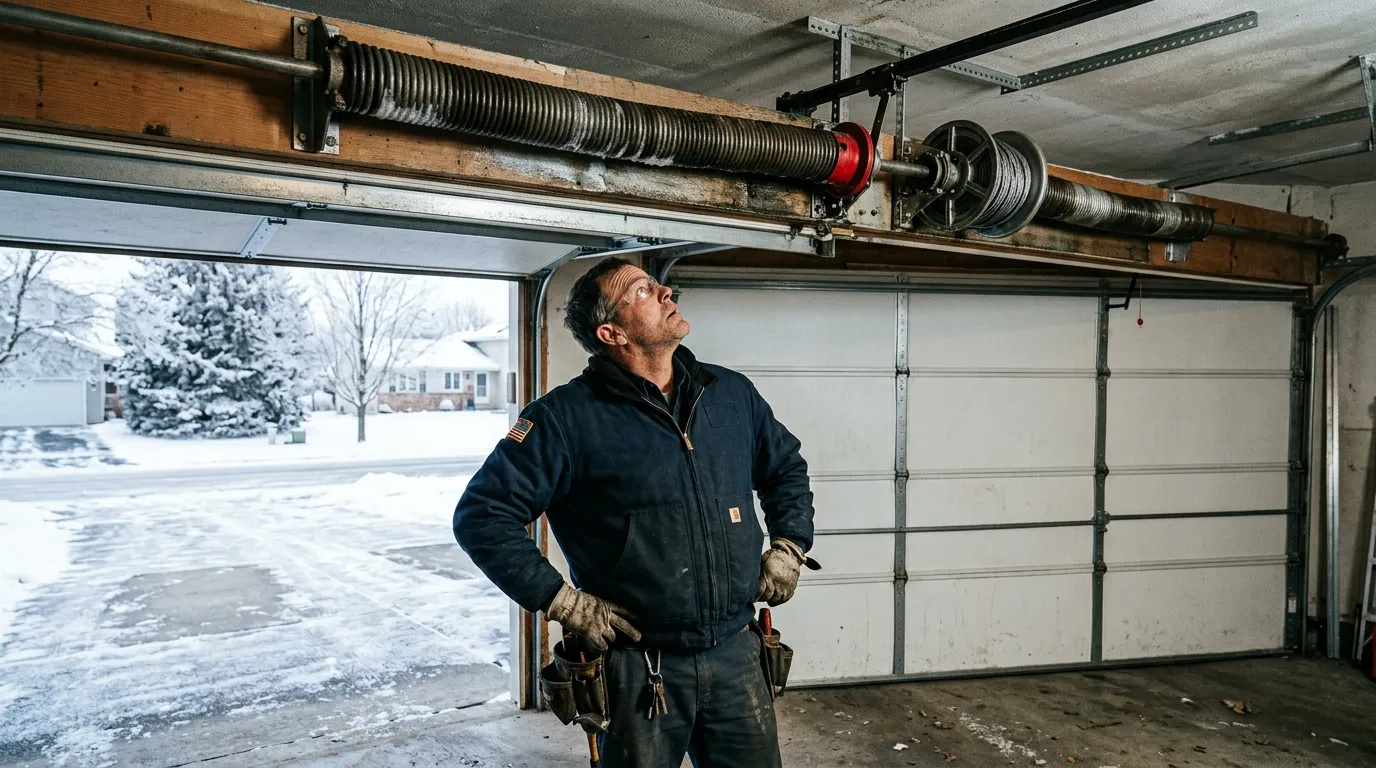
If your door is moving slow but still moving, and the spring still has coil tension you can see when the door's down, leave it alone until you can get eyes on it in daylight. Cold doesn't break a healthy spring outright - it makes a spring that was already close to the end of its cycle count finally let go. Chasing the noise yourself with the door up on a winter morning is how people lose fingers to a torsion bar.
We don't recommend DIY spring work at all, cold or not - that's the one job in this trade where a mistake puts you in the ER, not just out a few dollars. If the door won't move, or moves and drops, stop opening it by hand and call. That's the honest limit here: we can talk you through what to look at, but we're not going to walk you through replacing a spring over the phone, because that's not a safe repair for someone doing it once.
What Local Conditions Do
Dayton sits in a cold-severe climate band, and steel behaves differently at 15°F than it does at 70°F. Torsion springs lose a measure of flex in hard cold, so a spring already fatigued from years of cycling has less give right when the metal is stiffest and the door is heaviest to lift.
That's why the phone rings more on the first real cold snap of the season than in July - it's not that cold breaks springs on its own, it's that cold is when a marginal spring finally fails. Add in a slab that's colder than the garage air, which stiffens the door itself, and a spring running at the tail end of its life has one more reason to give out on a January morning rather than a September afternoon.
What to Look At First
Housing across this area was mostly built between 1938 and 1998, with the bulk of it going up through the 1960s and 70s across the named neighborhoods and suburbs in the region. That matters because a lot of those garages still have the original torsion setup, or a replacement spring sized for a door that's since been swapped for a heavier insulated one. First thing to check: the gap in the spring when the door is closed.
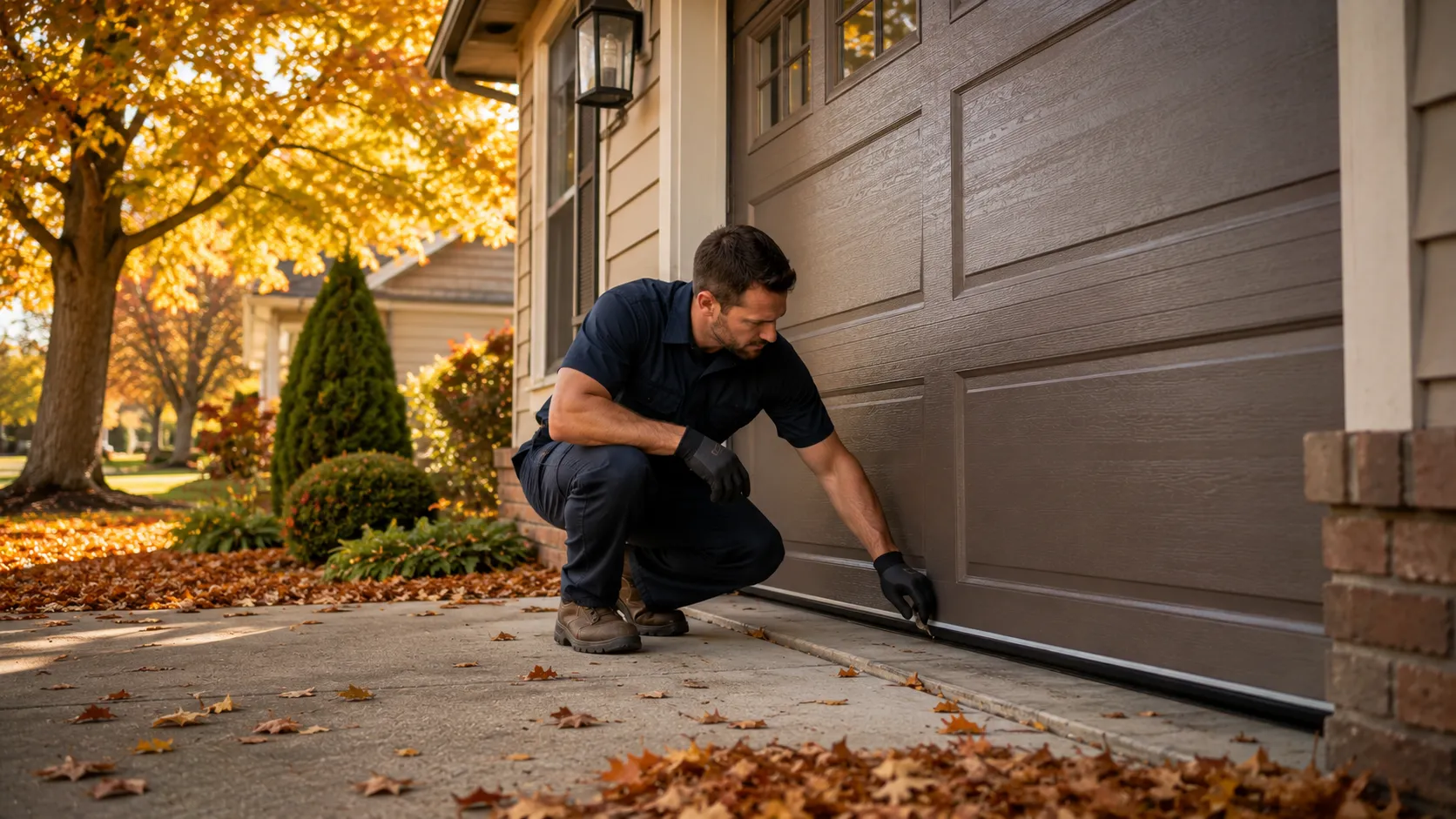
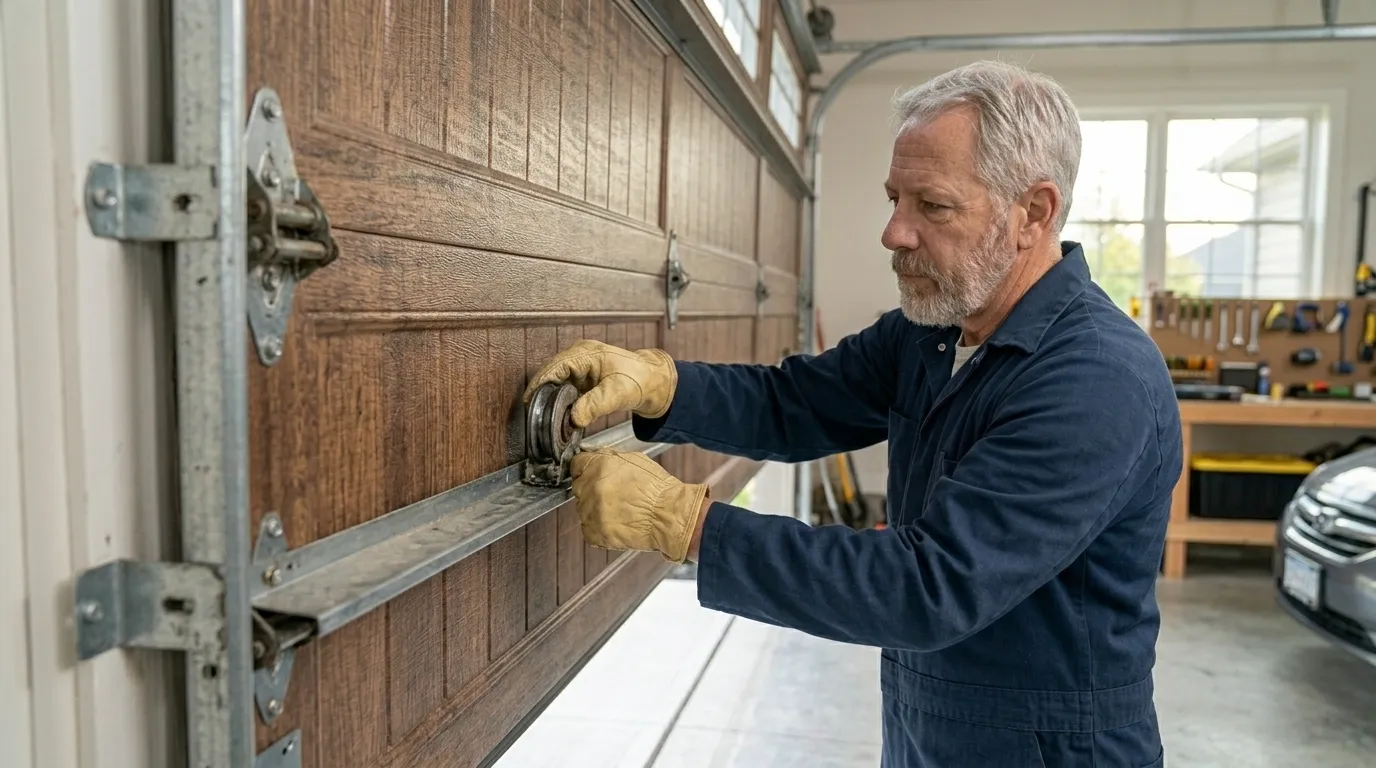
A visible separation in the coils means it's broken, full stop, no repair - that's a same-day parts call, not a DIY fix. Second, look at the cable drums and the bottom brackets for rust pitting, common on garages of that era that were never fully weatherproofed at the jambs. Third, if the door is from a home built before the 1980s, the track hardware may be original and undersized for a modern opener retrofit - worth a look before you assume the spring is the only problem.
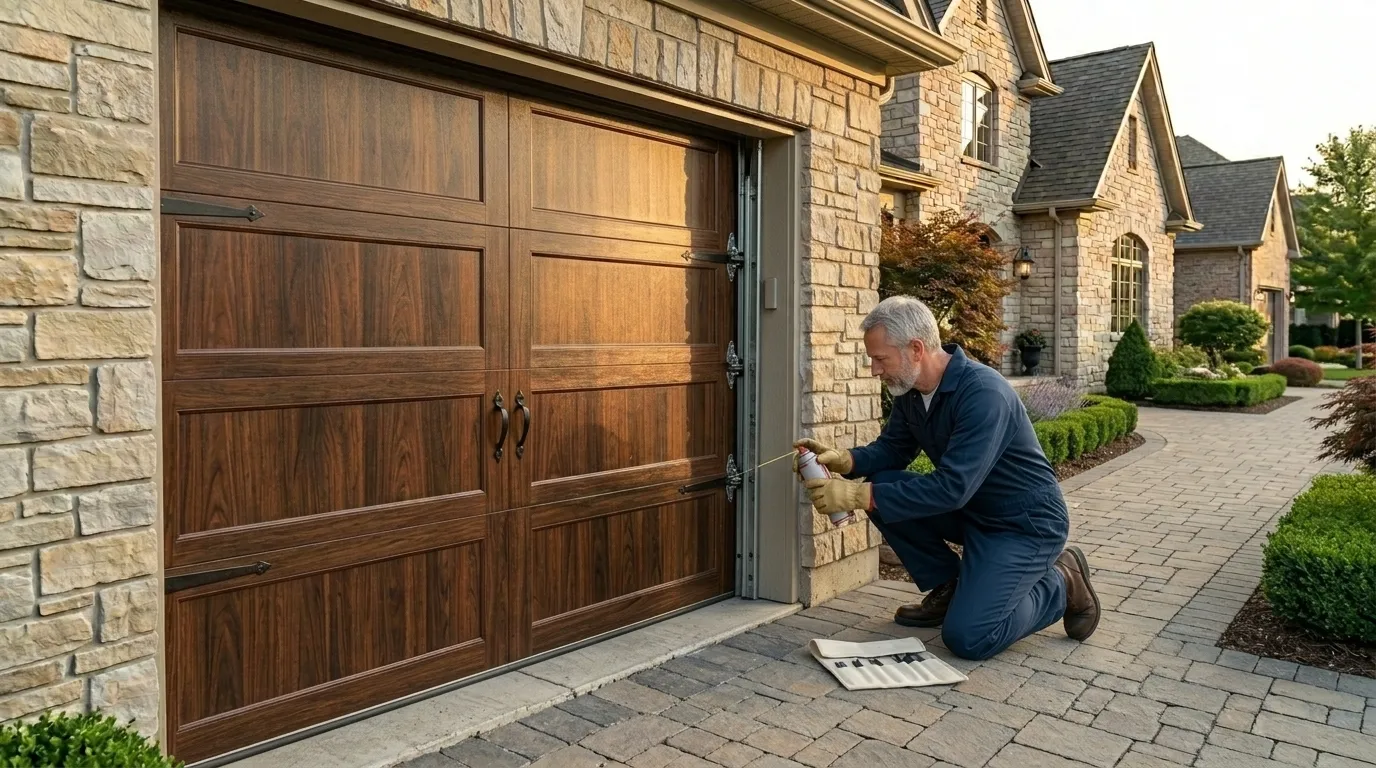
The Situation
We work out of Dayton and cover the surrounding towns - Shiloh, Riverside, Oakwood, Moraine, Trotwood, Vandalia, Kettering, Huber Heights, Englewood, West Carrollton, and out to Springboro, Xenia, and Fairborn among others. The service area holds roughly 187,000 households, with about 93,600 of those in owner-occupied houses, and a median household income near $70,000 - which tracks with what we see on jobs: people fixing the door they have rather than replacing the whole unit unless the spring failure exposed something worse underneath, like a cracked panel or a rusted-through track.
Given the age of the housing stock, most of what we're called out for in a cold stretch is a torsion spring at or past its rated cycle count, on hardware that's decades old. We don't stock every obscure bracket size from a 1971-era door, so on the rare job with genuinely original parts, there can be a short wait - that's the tradeoff of a service area built mostly before 1998.
How We Can Help
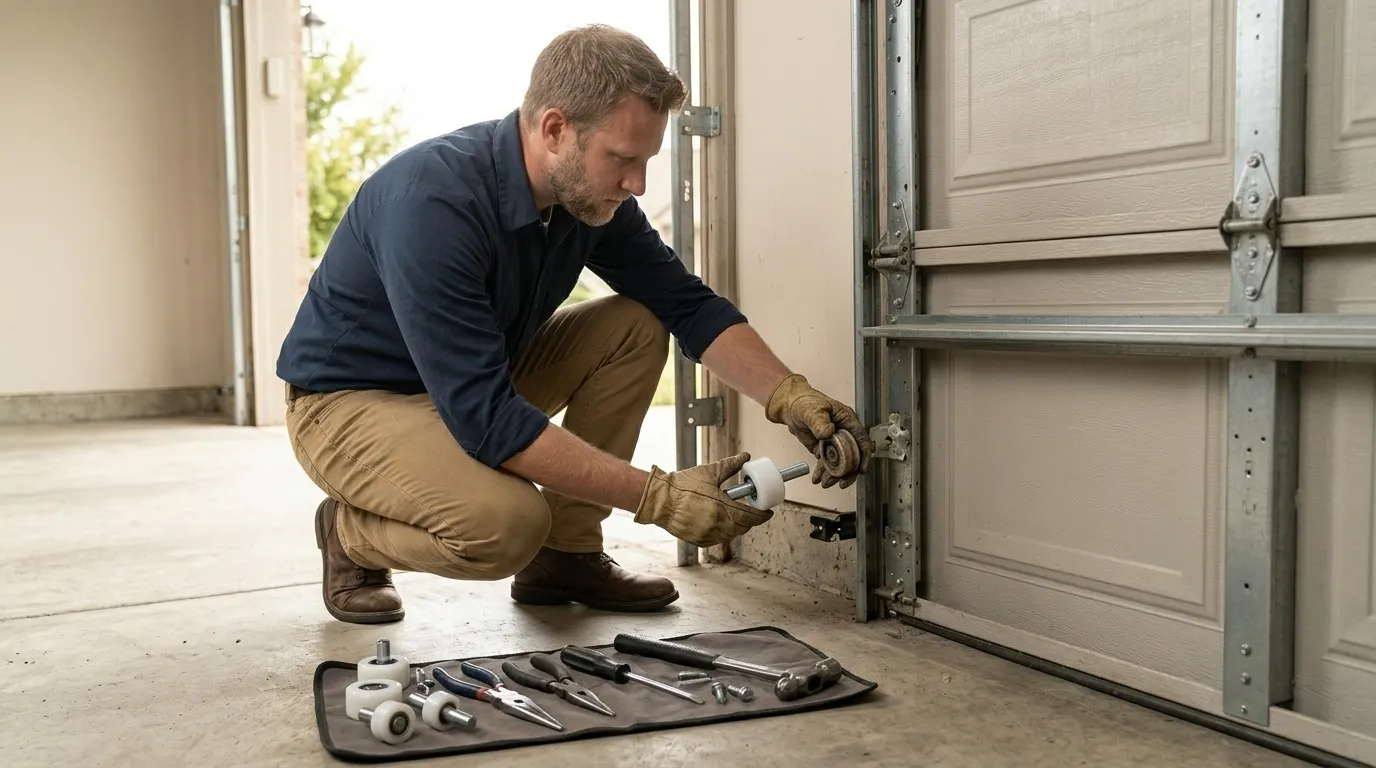
Garage Door Repair
Springs, cables, tracks, rollers, and openers fixed by a tech who explains the problem before touching anything.
Learn more →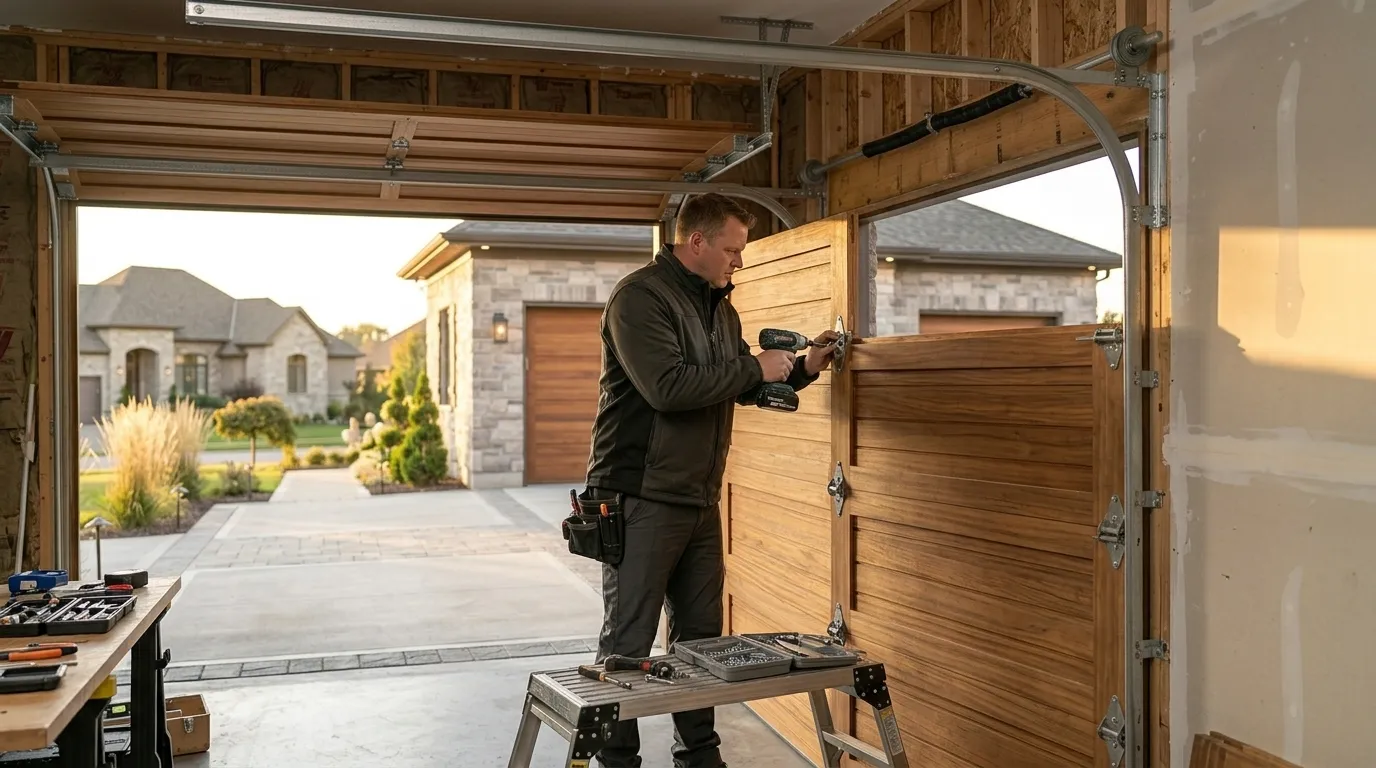
Garage Door Installation
New sectional doors sized and installed for the housing stock actually built in this area.
Learn more →
Garage Door Service
Tune-ups, lubrication, and safety checks that catch a small problem before it becomes a service call.
Learn more →Frequently Asked Questions
Why do garage door springs break more in winter here?
It's not really the cold snapping a good spring - it's that cold stiffens steel and the door itself, so a spring near the end of its life gives out right when it's under the most strain. Dayton's cold-severe winters just tend to be the final push on hardware that was already due.
My house was built in the 1960s - is the spring original?
It's possible. A lot of the housing stock in this area dates to the 1960s and 70s, and some garages still run original torsion hardware. If nobody's replaced it, it's worth having it checked before it fails on its own schedule.
Can I replace a broken torsion spring myself?
We don't recommend it. A wound torsion spring holds a lot of stored force, and the tools to do it safely aren't something most homeowners keep around. This is one job where a phone call costs less than an ER visit.
Do you cover towns outside Dayton itself?
Yes - we run jobs through the surrounding area including Kettering, Huber Heights, Vandalia, Oakwood, and towns further out like Springboro and Xenia. Distance from Dayton affects scheduling more than pricing.
Have a Door That Needs a Second Opinion?
Call and describe what it is doing - we will tell you what it likely is.