
Dayton, OH
Roller Replacement in Kettering
Roller Replacement for Kettering's Older Doors
Kettering's housing stock runs a decade older than the area median, which changes what fails on the roller track. Here's what that means for a repair.
- Licensed & Insured
- Same-Area Service Calls
- Upfront Pricing
What Happens When You Call
-
1
Call or Request a Quote
Tell us what the door is doing and roughly how old the house is - that alone points us toward the likely part before a truck leaves.
-
2
On-Site Diagnosis
A tech checks the spring, cables, tracks, and opener in person and tells you plainly what is actually wrong.
-
3
Straight Price, No Surprises
You get a number before any work starts. It covers parts and labor, nothing added after the fact.
-
4
Fixed the Same Visit
Most repairs are done in one trip. If a part needs sourcing, we tell you that upfront instead of guessing.
What You Pay
We don't quote a flat number for roller replacement over the phone, and we won't pretend to here, but a few things move the job in Kettering specifically. Most doors on this side of the service area date to around 1961, a decade ahead of the 1971 median for the wider coverage area, which means more of these jobs involve steel rollers on older stamped hinges rather than the nylon rollers that show up on newer builds elsewhere. Steel rollers with plain bearings cost less than sealed-bearing nylon, but they're also noisier and wear the track faster, so some owners here choose to upgrade the full set rather than replace like-for-like.
Kettering's median household income runs $71,619, a touch above the $70,000 median across the broader service area, and that's part of why we see more requests for the sealed-bearing upgrade instead of the cheapest stamped roller. If the track is bent or pitted from decades of steel-on-steel contact, that's a separate repair from the rollers themselves, and we'll say so before we start rather than sell a roller swap that won't fix a track problem. For general service details and how we price visits, see our Kettering service page.
How It Shows Up
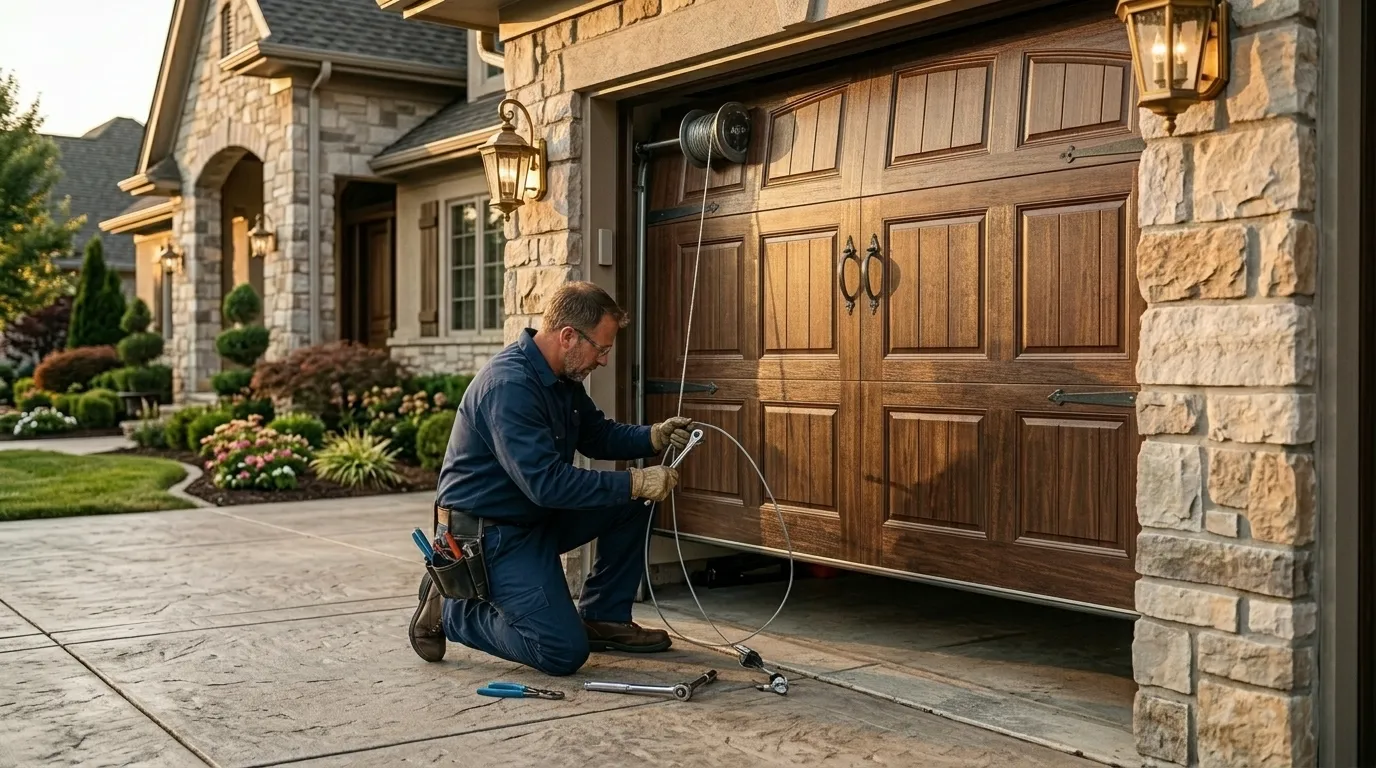
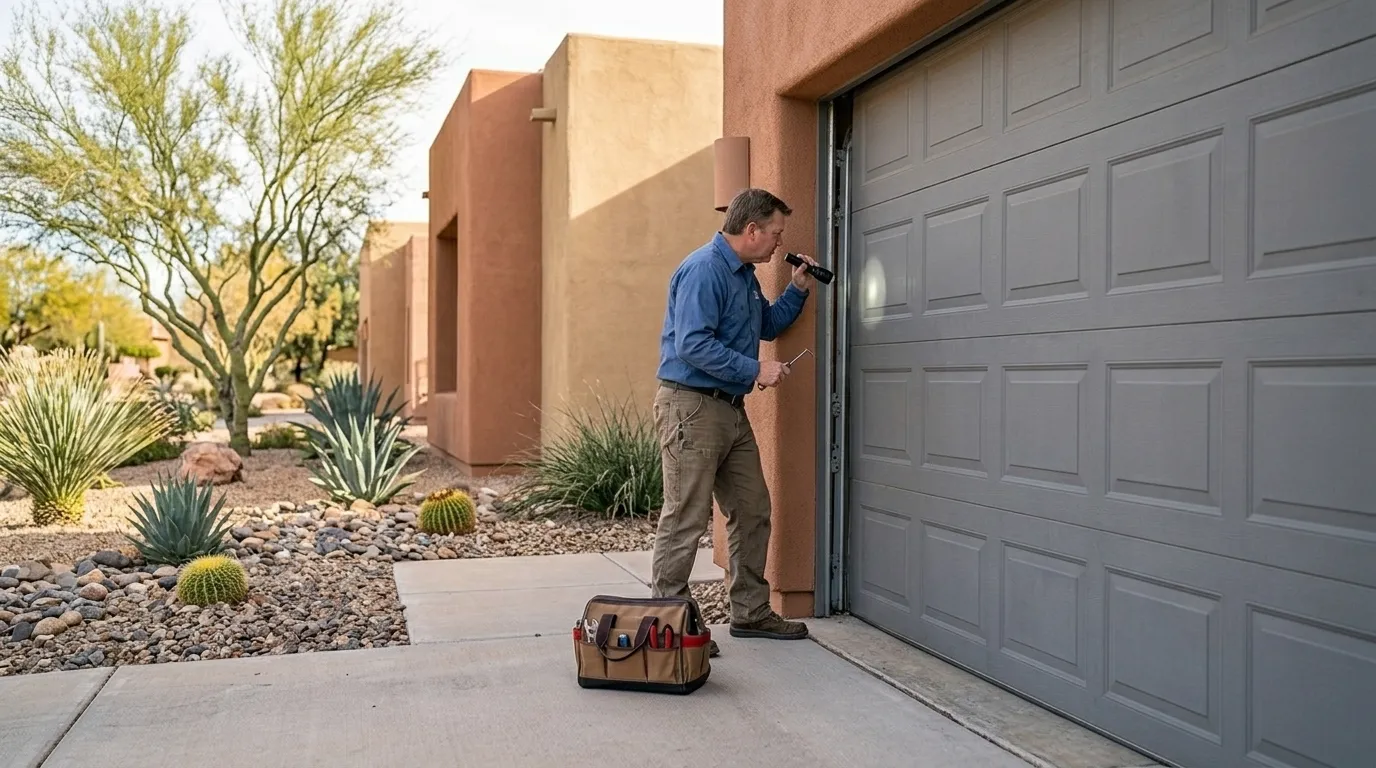
On a door built around 1961, the first sign is usually a grinding or popping sound as the door travels, not a full jam. Steel rollers from that era ride in plain bearings, and once the lubricant dries out the roller doesn't spin so much as drag, chewing a flat spot into itself and scoring the track at the same time. You'll often feel it before you hear it: the door hesitates at the same spot on every open and close, usually a foot or two off the floor where the roller passes through the curved section of track.
On newer nylon-roller setups the failure tends to be quieter, a slight rattle rather than a grind, because the roller cracks rather than flattens. Either way, if the door is catching at a consistent point rather than randomly, that's roller and track wear talking, not a spring or opener problem. Ignoring it long enough turns a roller job into a track job, since a flat-spotted steel roller keeps gouging the rail every time it passes.
What Can Go Wrong
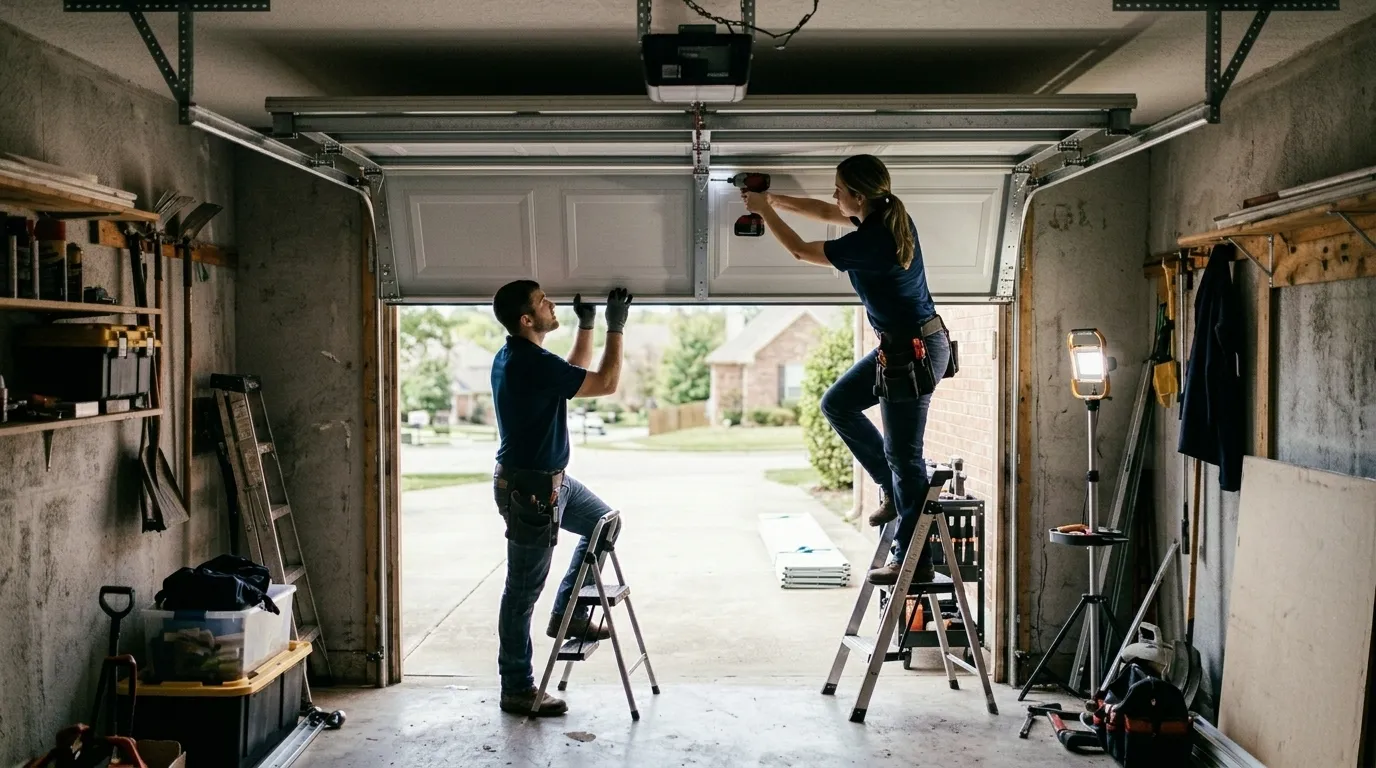
The roller itself is rarely the whole story on a door this age. A stamped hinge that's rusted around the roller stem can seize the roller in place, so it stops rotating and just scrapes along the track, which is what actually digs the gouge you see in the rail. On some 1961-era doors we also find the roller stem has worn oversized in the hinge socket, so a new roller wobbles instead of sitting square, and the fix there is a new hinge, not just a new roller.
Cable and roller problems can look similar from six feet away, both cause the door to stick, but a frayed cable is a safety issue that needs stopping the job and calling it in, not pushing through. One honest limit: if the track is bent more than slightly, swapping rollers won't straighten it, and running a new roller in a bent track just wears it out again in a season. That's a track realignment or replacement job, and we'll tell you that upfront rather than sell rollers as a fix for a track problem.
Why It Happens Here
Kettering's housing stock centers on 1961, roughly a decade older than the 1971 median across the wider Dayton-area service territory, and that decade matters for hardware. Doors from the early 1960s were far more likely to ship with steel rollers on plain bearings, a design that was standard before nylon rollers with sealed bearings became common on the newer builds that make up more of the area median. Add the region's severe cold climate band, and steel track and steel rollers contract together each winter, tightening tolerances that were never generous to begin with.
That combination, older steel hardware plus a real cold season, is why roller wear shows up sooner here than it might on a door built in the 1980s or 1990s elsewhere in the service area. Kettering sits about seven miles from Dayton, one of the closer suburbs we reach, but the age of the door in front of us, not the distance, is what decides whether this is a roller job or something bigger. For the general roller replacement service we run across the wider area, see our Dayton roller replacement page.

Talk to a Kettering Technician First
Describe what the door is doing and get a straight answer on what it likely needs.
Other Garage Door Services in Kettering
Recent Work in Kettering
A look at jobs our crew has been on nearby.
Why Kettering Calls Us
Frequently Asked Questions
How many rollers does a Kettering garage door usually need replaced at once?
Most residential doors run 10 to 12 rollers total, and we generally recommend replacing the full set together rather than one or two. On a door from around 1961 the rollers wear at close to the same rate, since they've all seen the same decades of steel-on-steel travel, so replacing just the noisy one usually means a callback within a year for the next.
Are steel rollers or nylon rollers better for a door this old in Kettering?
Nylon rollers with sealed bearings run quieter and last longer, and we can usually fit them to an older hinge without replacing the hinge itself. Steel rollers cost less upfront but wear the track faster in a cold climate. For a door built around 1961 that's staying long-term, the nylon upgrade tends to pay for itself in fewer callbacks.
Can I replace rollers myself on an older Kettering door?
You can, but a door from the early 1960s often has hinges worn oversized around the roller stem, which isn't obvious until the new roller wobbles in place. We'd rather you call before buying parts than have you find that out with the door half-disassembled.
Need Roller Replacement in Kettering?
Call now for straight answers on cost and timing.