
Dayton, OH
Service
Garage Door Panel Replacement, Dayton OH
Dented or cracked garage door panels are common on Dayton's 1960s-70s housing stock. We stock matching sections and replace single panels without a full door swap.
- Licensed & Insured
- Same-Area Service Calls
- Upfront Pricing
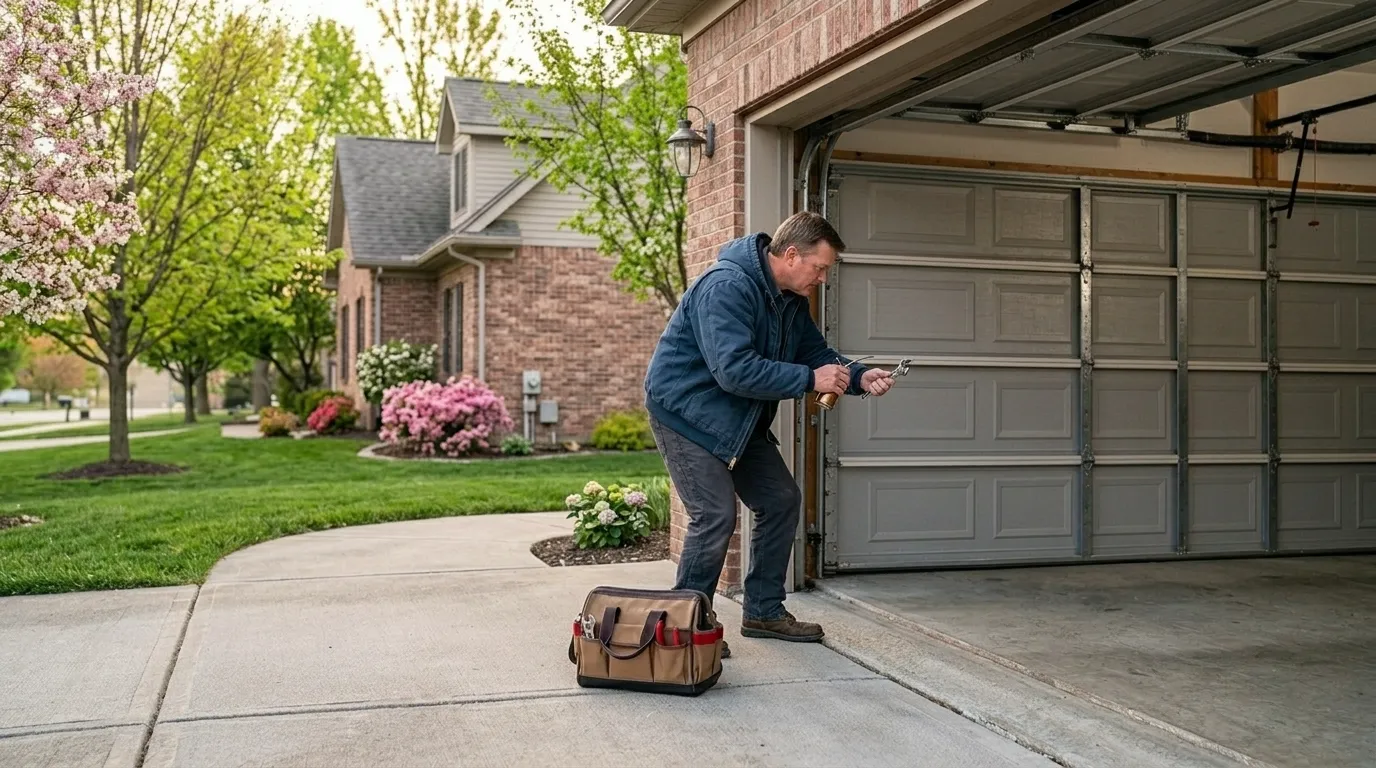
What Happens When You Call
-
1
Call or Request a Quote
Tell us what the door is doing and roughly how old the house is - that alone points us toward the likely part before a truck leaves.
-
2
On-Site Diagnosis
A tech checks the spring, cables, tracks, and opener in person and tells you plainly what is actually wrong.
-
3
Straight Price, No Surprises
You get a number before any work starts. It covers parts and labor, nothing added after the fact.
-
4
Fixed the Same Visit
Most repairs are done in one trip. If a part needs sourcing, we tell you that upfront instead of guessing.
Why It Happens Here
Most of the garage doors we get called out for sit on houses built between 1938 and 1998, with the bulk of that stock going up in the 1960s and 70s. That matters for panels specifically.
Doors from that era were built in narrower sections with thinner steel skins than what's sold today, and after fifty-plus years of Ohio winters, the seams between panels get brittle. One hard freeze-thaw cycle, one stuck bottom roller dragging against a panel edge, and the metal splits instead of flexing.
Dayton sits in a cold-severe climate band, which means real freeze depth, ice buildup on tracks, and temperature swings that stress steel and the foam-and-adhesive bond inside insulated panels. A panel that's been quietly cracking along a seam for two winters will finally let go on the coldest morning of the third, usually right when the door is under the most load from a frozen bottom seal.
A lot of these houses also have detached garages with single-car doors, which use different panel widths and hardware than the double-door builders installed on newer construction. That's part of why panel matching, not full-door replacement, is the right call for so many jobs here - the frame and track are often fine, it's just the skin that's failed.
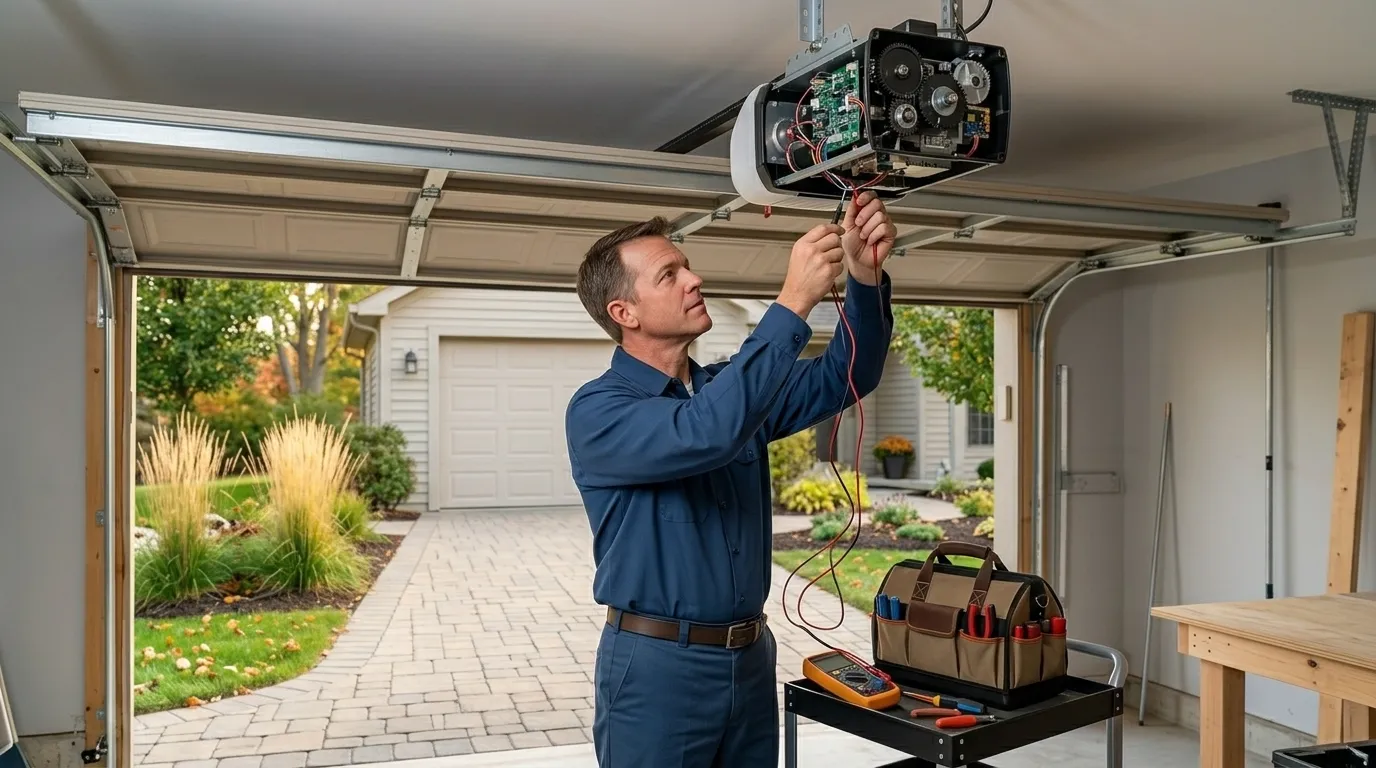
Stocked Parts
We keep panel sections on hand sized for the door widths that actually show up on Dayton's older housing stock - narrow single-car panels as well as the wider sections used on doors installed since the 1980s. Because so much of the local stock dates to the 1960s and 70s, we see the same handful of panel heights and rib patterns over and over, and we stock to that pattern rather than guessing.
What we don't carry on the truck is every discontinued color and every woodgrain-embossed panel style a builder used forty years ago. If your door is an odd shade or an obsolete texture, we can usually source a close match, but it may not be an exact color blend, and we'll tell you that up front before you commit to the job. Trying to hide that gap would just mean a panel that looks slightly off next to the rest of the door, and you'd notice it every time you pulled in.
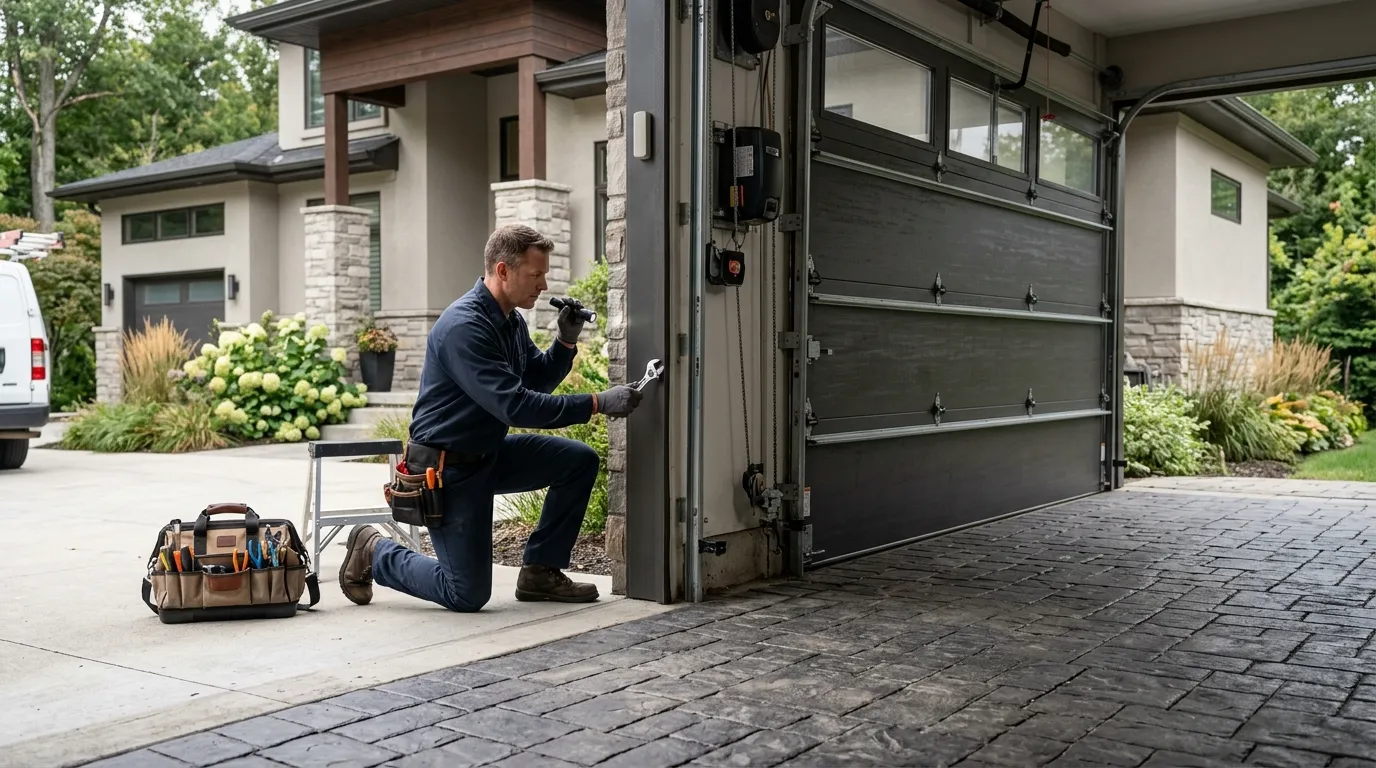
What You Pay
We price panel replacement by section - what it takes to match the width, height, and insulation type of the panel that failed, plus labor to pull the old one and reset the hardware. A single panel swap on a standard single-car door costs less than replacing the whole door, and for most of the cracked or dented panels we see on older Dayton garages, that's the right fix: the track, springs, and opener are usually still sound.
We won't push a full door replacement on you if one panel is the actual problem. That said, if the door is old enough that a second or third panel is close behind the first, or if the color match isn't going to hold, we'll say so rather than sell you a patch job you'll be paying for again in a year.
How It Shows Up
The usual first sign is a horizontal crack along a panel seam, usually near the bottom section where road salt and slush spray hit hardest through a Dayton winter. Sometimes it's a dent from a car bumper or a trash can that's gotten worse over a few cold months as the metal fatigues along the damaged edge.
On older single-car garages with the narrower panel sizing common through the 1960s and 70s stock, a cracked panel often throws the whole door slightly out of square, so it drags on the track or the opener strains to close it the last foot. If you're hearing a new grinding sound right at the bottom of the travel, or the door catches instead of sealing flush, that's usually the panel, not the opener.
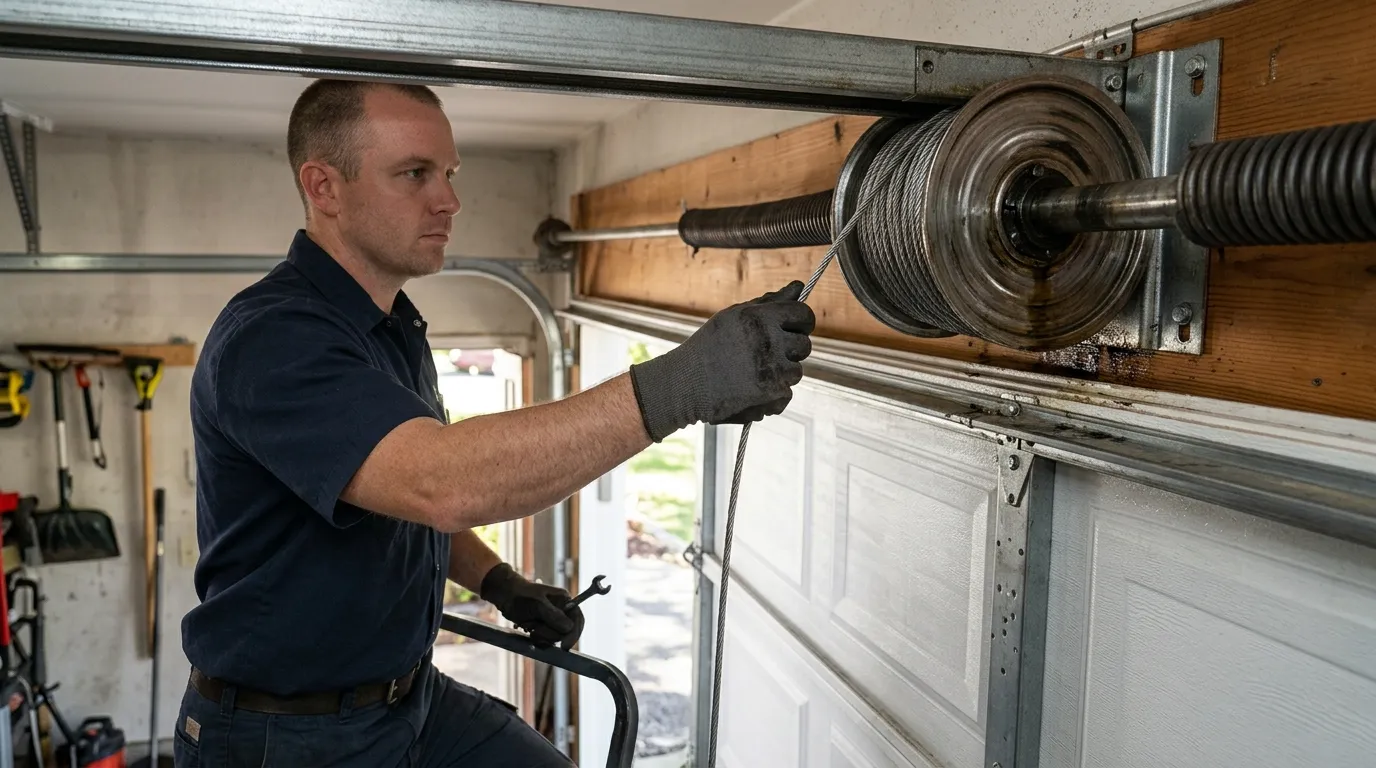
Talk to a Technician Before You Book
Describe what the door is doing and get a straight answer on what it likely needs.
Jobs Like Yours
Recent work from this service line.
Why Dayton Calls Us
Frequently Asked Questions
Can you replace one garage door panel without replacing the whole door?
Yes, in most cases. If the track and springs are still good, which they usually are on the older single-car and double-car doors common around Dayton, we match the section by width, height, and insulation type and swap just that panel. Full door replacement only makes sense if several panels are failing or the color/style is no longer available.
Why did my garage door panel crack in the winter?
Dayton sits in a cold-severe climate band, and repeated freeze-thaw cycles stress the seams between panel sections, especially on doors installed decades ago with thinner steel skins. A panel that's been slowly cracking for a season or two often finally splits during the hardest freeze of the year, usually under the added load of a frozen bottom seal.
Will a replacement panel match my existing door exactly?
For the panel sizes and rib patterns common on Dayton's 1960s-70s housing stock, usually yes. For older discontinued colors or embossed woodgrain styles, we can source a close match but can't always guarantee an exact color blend. We'll tell you before the job if an exact match isn't available.
Need Garage Door Panel Replacement, Dayton OH?
Call now for straight answers on cost and timing.