
Dayton, OH
Roller Replacement in Huber Heights
Roller Replacement for Huber Heights' 1970s Garage Doors
Huber Heights homes built mostly through the 1970s still run steel rollers on steel track. Here's what wears out first and what the fix from our Dayton crew involves.
- Licensed & Insured
- Same-Area Service Calls
- Upfront Pricing
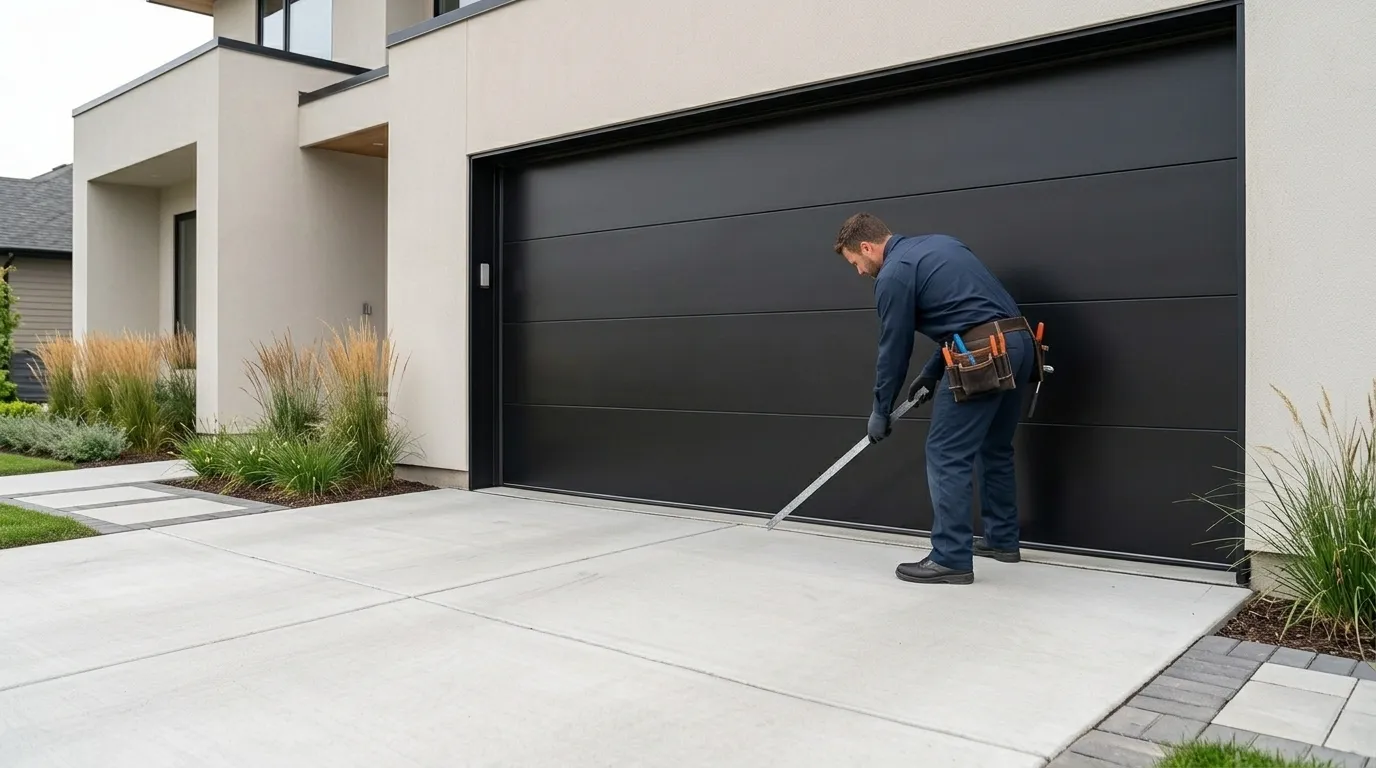
What Happens When You Call
-
1
Call or Request a Quote
Tell us what the door is doing and roughly how old the house is - that alone points us toward the likely part before a truck leaves.
-
2
On-Site Diagnosis
A tech checks the spring, cables, tracks, and opener in person and tells you plainly what is actually wrong.
-
3
Straight Price, No Surprises
You get a number before any work starts. It covers parts and labor, nothing added after the fact.
-
4
Fixed the Same Visit
Most repairs are done in one trip. If a part needs sourcing, we tell you that upfront instead of guessing.
Getting It Booked In
Huber Heights sits about 7 miles from our Dayton shop, and most of the calls we get from there are for the same reason: rollers that have outlived the door they're mounted on. We don't run a branch out here, so when you call, we're scheduling a truck to travel in from Dayton rather than dispatching from around the corner. That's worth knowing up front - it's not a same-block response, it's a routed one.
When you call, tell us the door's rough age if you know it, and whether the noise is a grinding rattle (usually rollers) or a sharp bang (usually something else, like a cable or hinge). Houses in this area were mostly built through the 1970s, with a median build year around 1975, and that generation of door almost always shipped with steel rollers riding in steel track - no nylon, no sealed bearings. If your rollers have never been swapped, they're original hardware pushing fifty years old, and that changes what we bring on the truck versus a job on a newer door.
We'll ask a couple of questions on the phone to figure out if this is a roller-only job or if the track's been bent by the wear, since those two often show up together on doors this old.
How It Shows Up
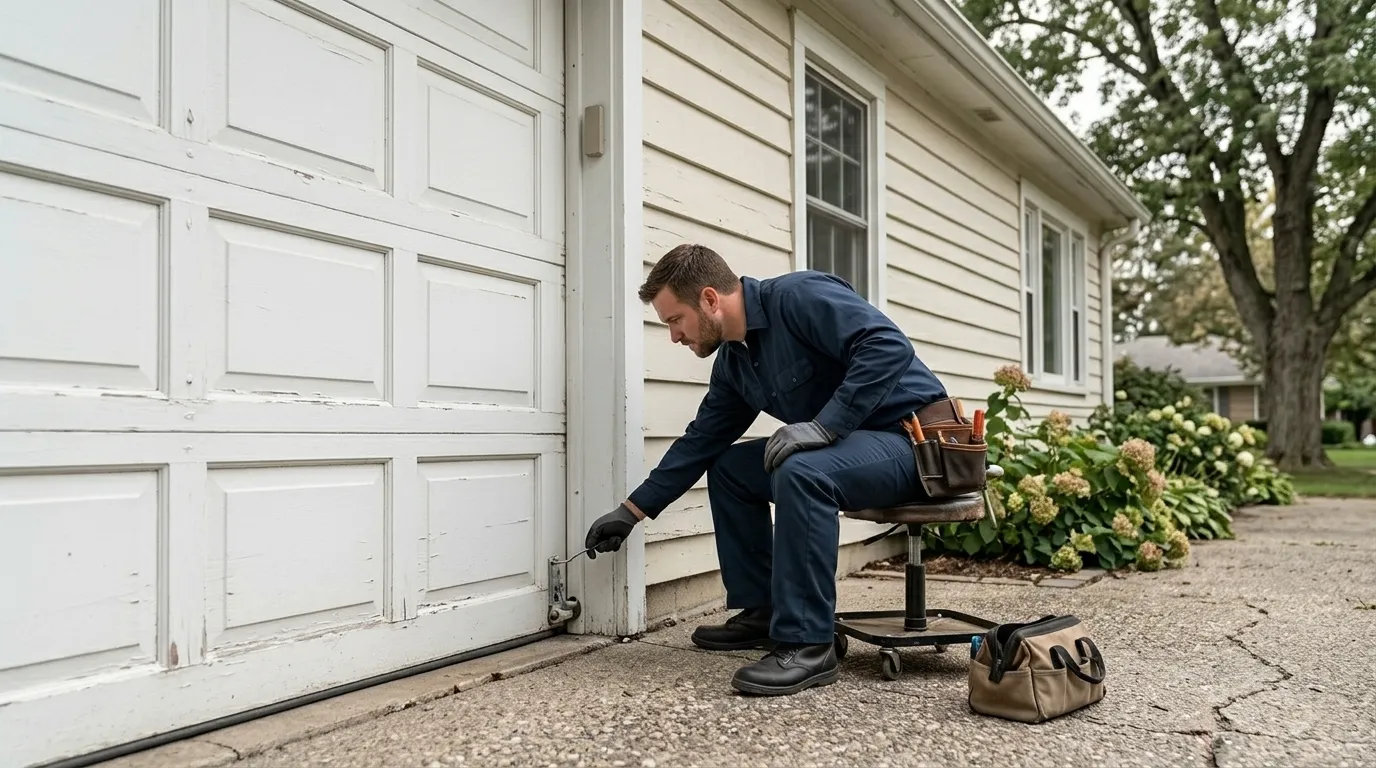
On a door from the 1975 era, roller failure has a specific sound and a specific sequence. First it's a rhythmic squeak as the door travels, then a grinding as the steel wheel wears flat on one side instead of staying round, then a jerking motion as the flat spot catches the track edge. On these older doors, the track itself is usually also steel and narrower than what goes on new installs, so a worn roller chews the track lip faster than it would on a wider modern rail.
You'll often notice it first at the top or bottom of the travel, where the door slows or hangs for a second before the opener forces it through. Some owners describe it as the door "skipping." That skip is metal on metal, and left alone it eventually cracks a roller stem or pulls a hinge loose from the panel.
Because the regional climate here runs cold and severe through the winter, steel rollers that have gone dry also seize slightly in the cold, so a door that was merely noisy in October can be genuinely hard to lift by January. That's not unique to any one house - it's a seasonal load on hardware that's already tired.
What the Repair Takes
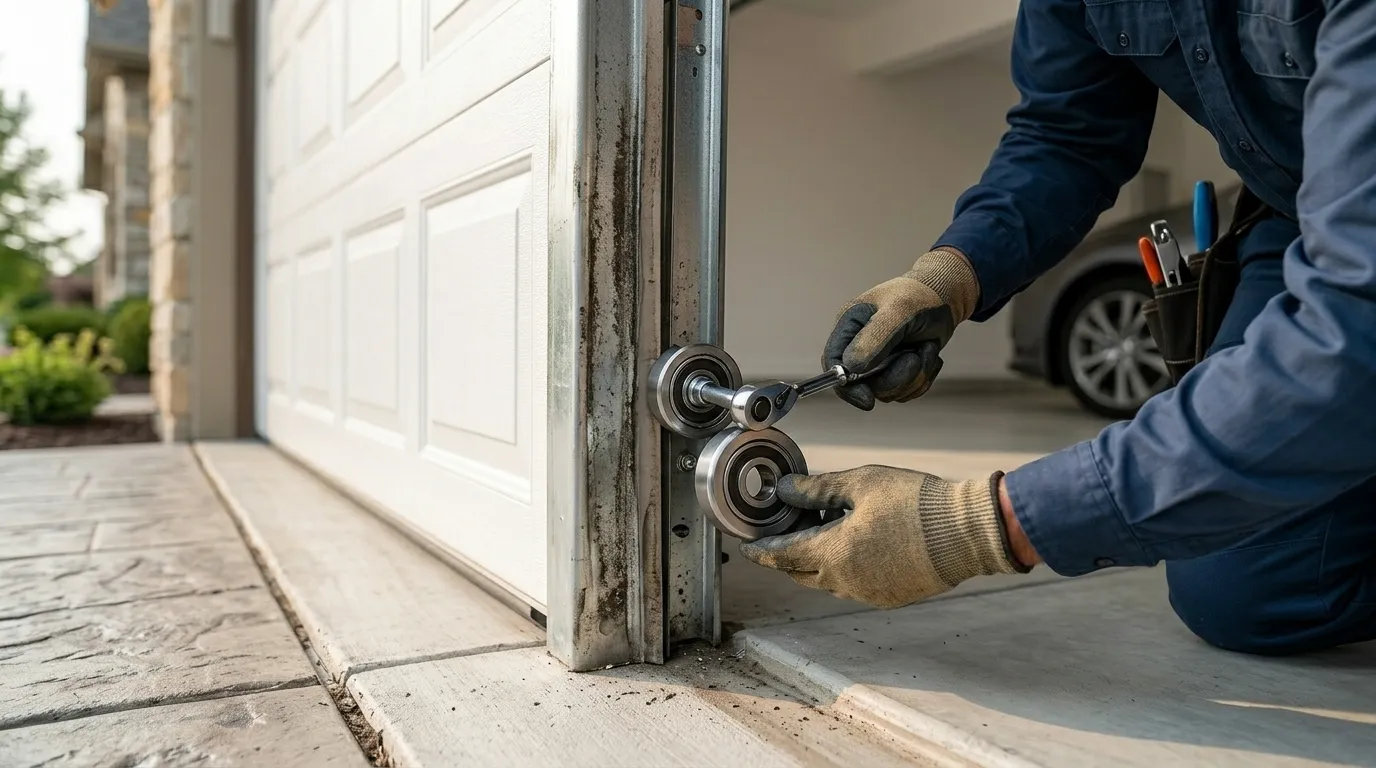
A straight roller swap on a residential double door is a few hours of work: we lift the door off the track section by section, pull the old rollers out of the hinge brackets, and set new ones in - usually nylon with sealed bearings, which run quieter and don't flat-spot the way the original steel ones do. On a door this old we also check the track alignment while it's open, because five decades of a worn roller riding unevenly can walk the track out of plumb by a small but real amount.
If the stems are rusted into the brackets - common on original hardware from the 1970s that's never been serviced - the swap takes longer, since we're working the old stem free instead of just sliding a new roller into place. We won't force it and risk cracking a panel bracket that's original to a door this age; sometimes the honest move is to replace the bracket along with the roller rather than fight it.
We don't replace springs or openers as part of a roller job unless something else fails during the work - that's a separate call, and we'll tell you plainly if we see it.
The DIY Question
Rollers look like the easiest garage door part to swap yourself, and on some doors they nearly are - pull the retaining hardware, slide the old roller out, slide the new one in. Where it goes wrong on a house from this era is the top rollers, which sit near the torsion spring assembly. That spring is under real tension, and on original 1970s hardware the bracket holding it has usually never been inspected, let alone serviced.
If you're only replacing the bottom rollers, and you're comfortable with hand tools, it's a reasonable weekend job. If you're touching anything above the second panel, we'd rather you call, because the failure mode there isn't a stuck roller - it's a bracket letting go under spring load. That's the honest limitation: we can't recommend an on-the-cheap fix for the top rollers on a door this old, and we won't pretend otherwise just to sound helpful.
What You Pay
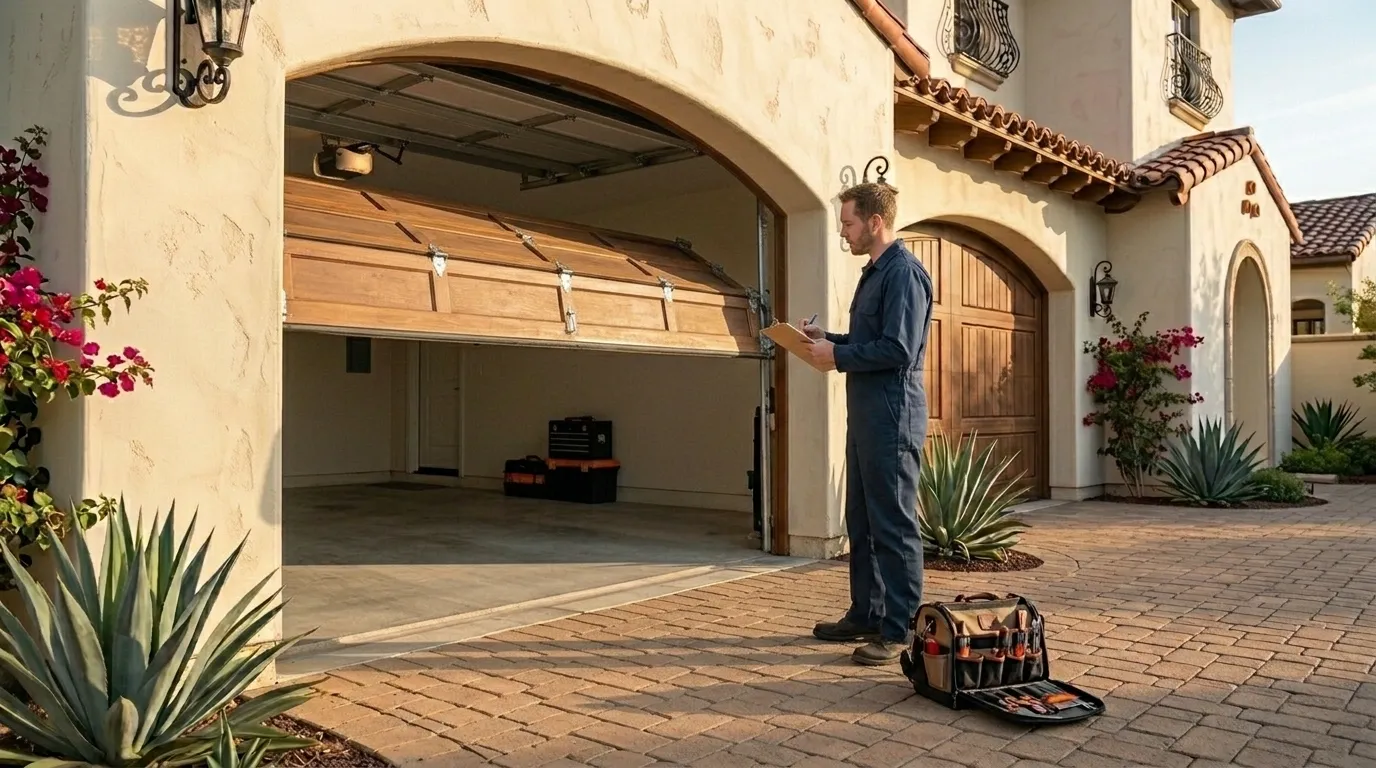
We don't post a flat number here because the job varies with how seized the old hardware is and whether the track needs straightening alongside the rollers - both of which are more likely on a door built in the 1975 range than on something from the last ten years. What we can tell you is that the median household income across our service area runs around $70,000, and locally in Huber Heights it's closer to $76,551, which is one reason we see more owners here choose to replace all the rollers on a door at once rather than patch just the worst one - it holds up better through a winter and it isn't a huge jump in labor over doing half the job.
We'll give you a firm number on the phone once we know the door's age and whether you want steel or nylon rollers, and we'll say so again in person before we start any work.
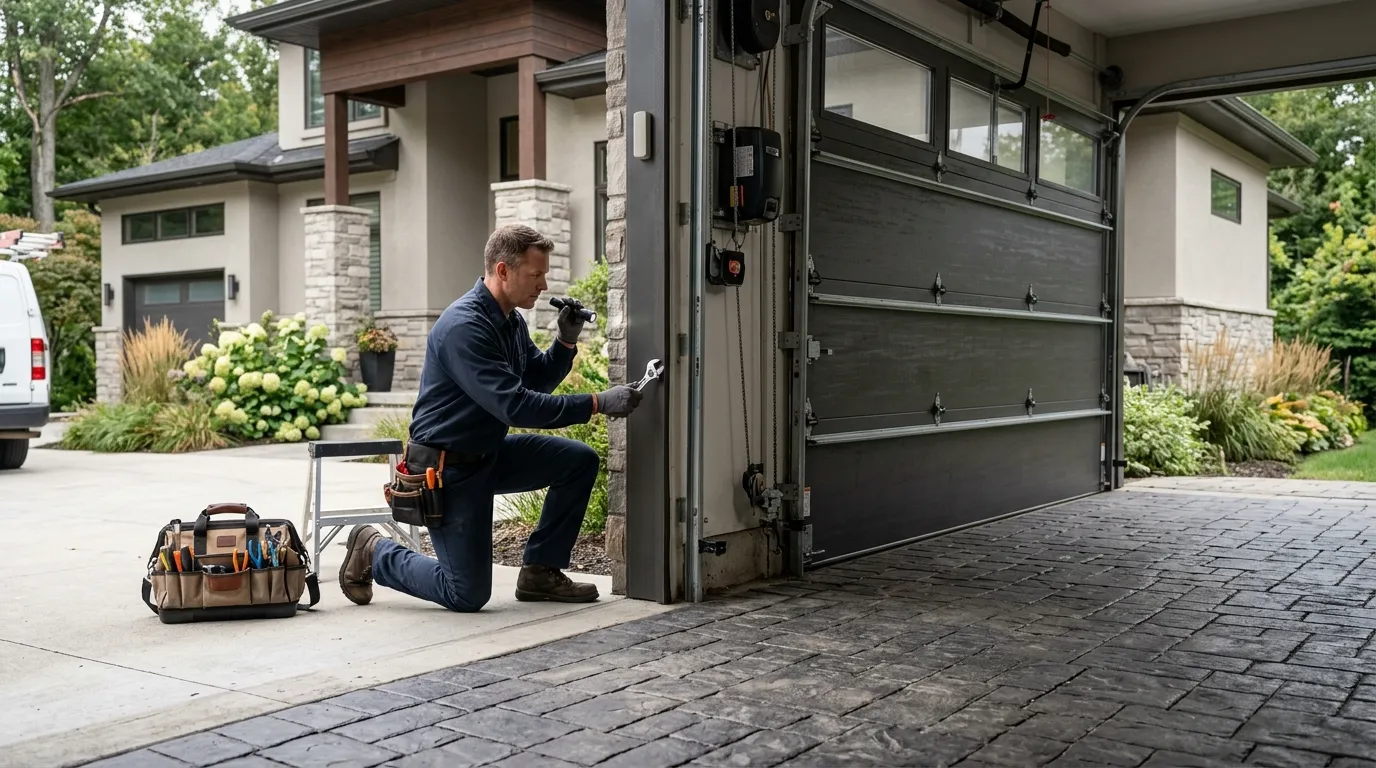
Talk to a Huber Heights Technician First
Describe what the door is doing and get a straight answer on what it likely needs.
Other Garage Door Services in Huber Heights
Recent Work in Huber Heights
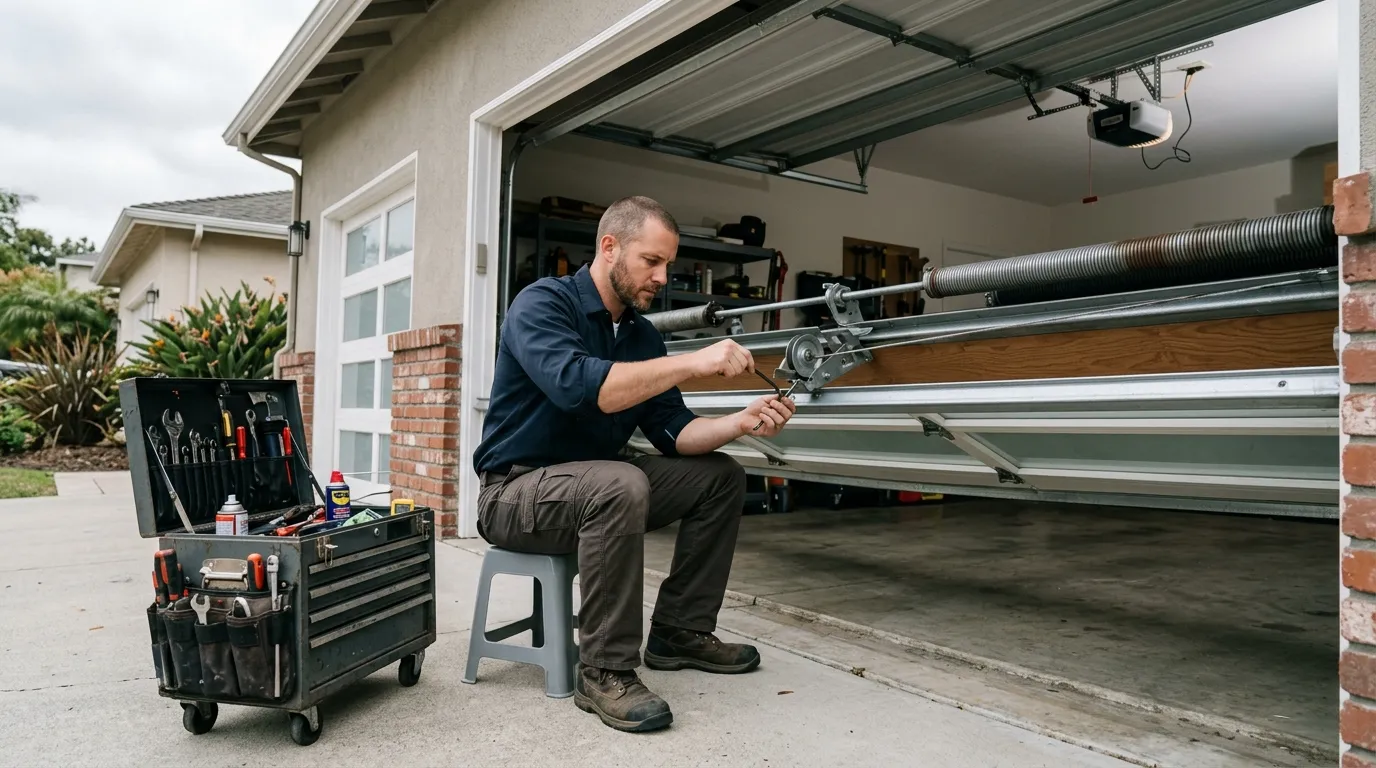
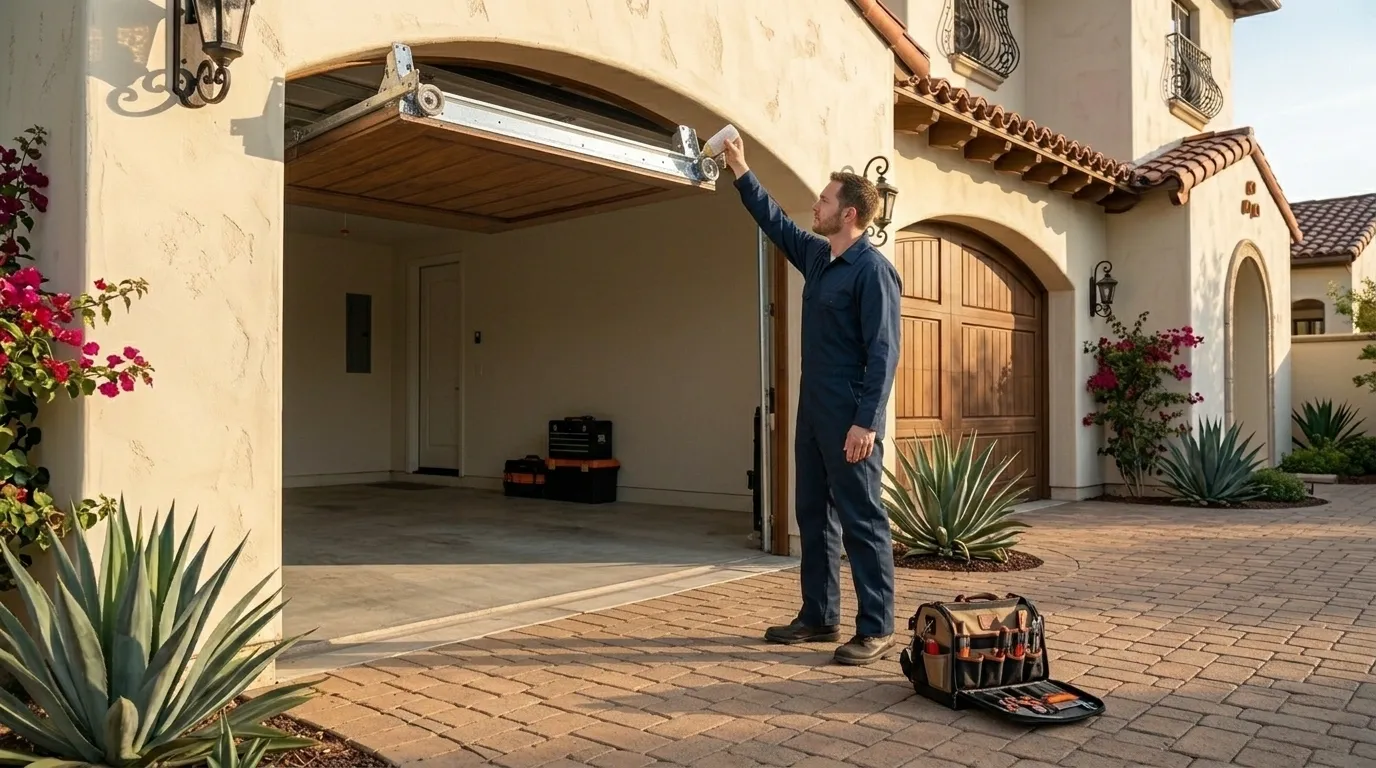
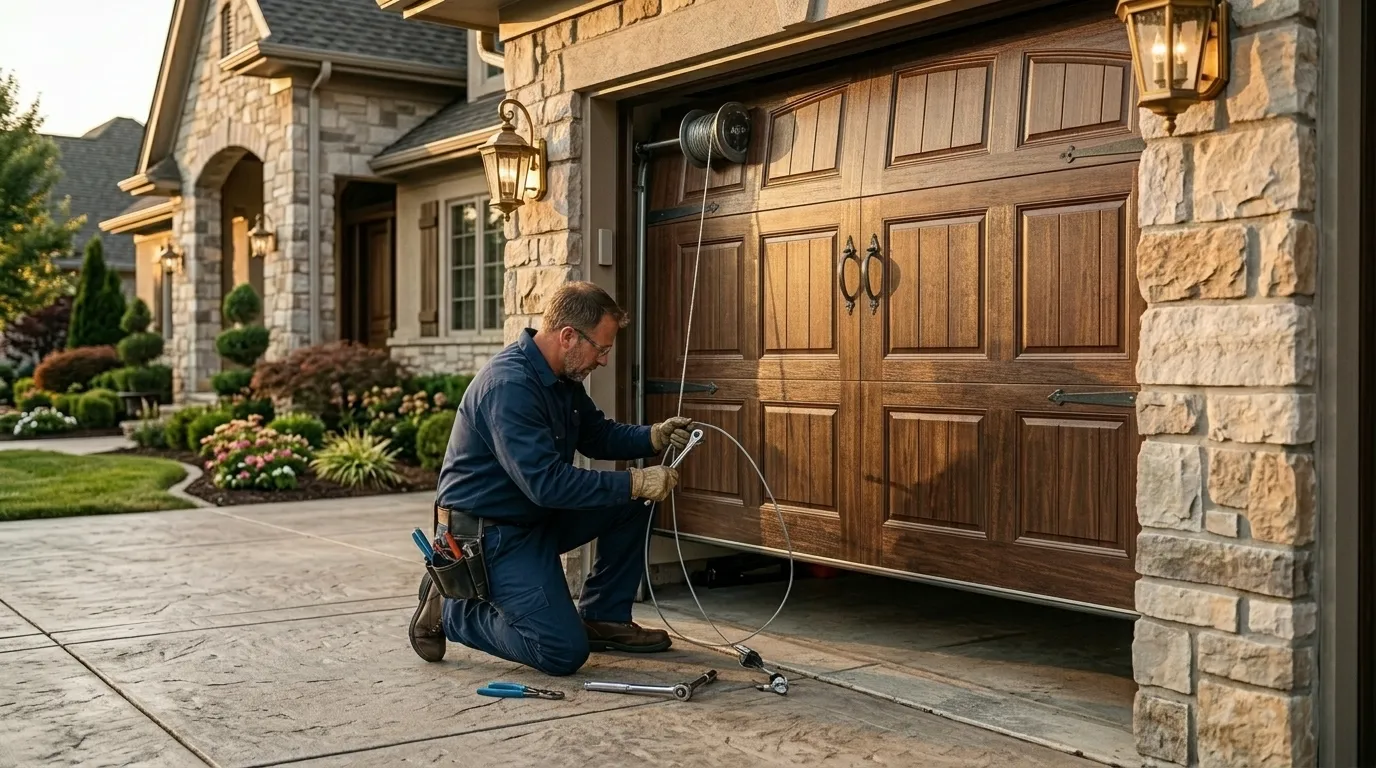
A look at jobs our crew has been on nearby.
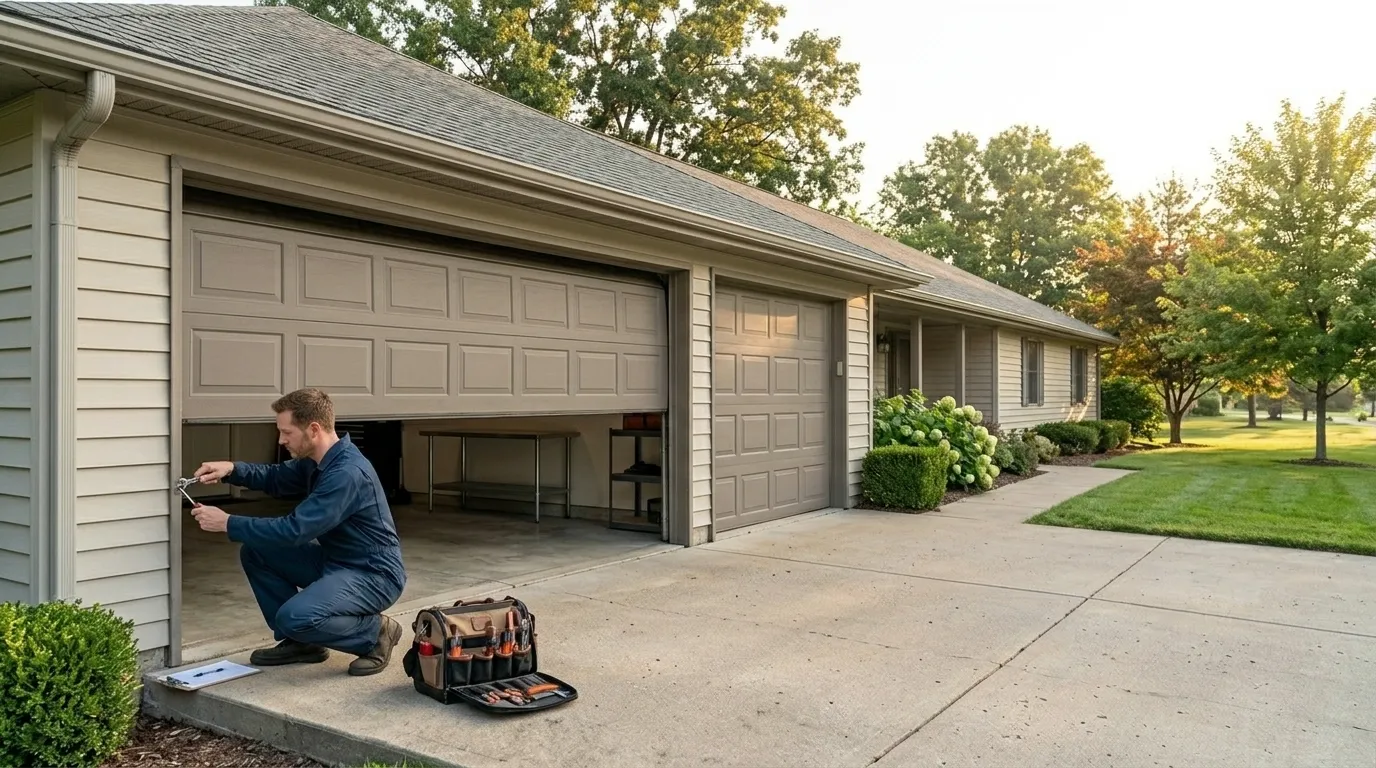
Why Huber Heights Calls Us
Frequently Asked Questions
Why does my garage door roller wear out faster than it used to?
If your house dates to the mid-1970s like most of this area, the original rollers are steel on steel track, which wears through friction with no bearing to absorb it. Once a flat spot forms, wear speeds up fast. Nylon rollers with sealed bearings, which is what we install now, don't wear the same way.
Do you have a shop or crew based in Huber Heights?
No - we run out of Dayton, about 7 miles away, and route a truck out for scheduled jobs. We don't claim a local branch or a guaranteed response window for this area, just a scheduled visit from our Dayton crew.
Can I replace just one roller instead of the whole set?
You can, but on a door old enough to have original hardware, the rest of the rollers are usually close behind. We'll look at wear on all of them during the visit and tell you honestly if a single swap will hold or if you're better off doing the full set now.
Will cold weather make my roller problem worse?
Yes. The climate here runs cold and severe in winter, and dry steel rollers stiffen up in the cold, adding load to an opener that's already fighting a worn wheel. A noisy door in fall often gets noticeably harder to lift by mid-winter.
Need Roller Replacement in Huber Heights?
Call now for straight answers on cost and timing.